

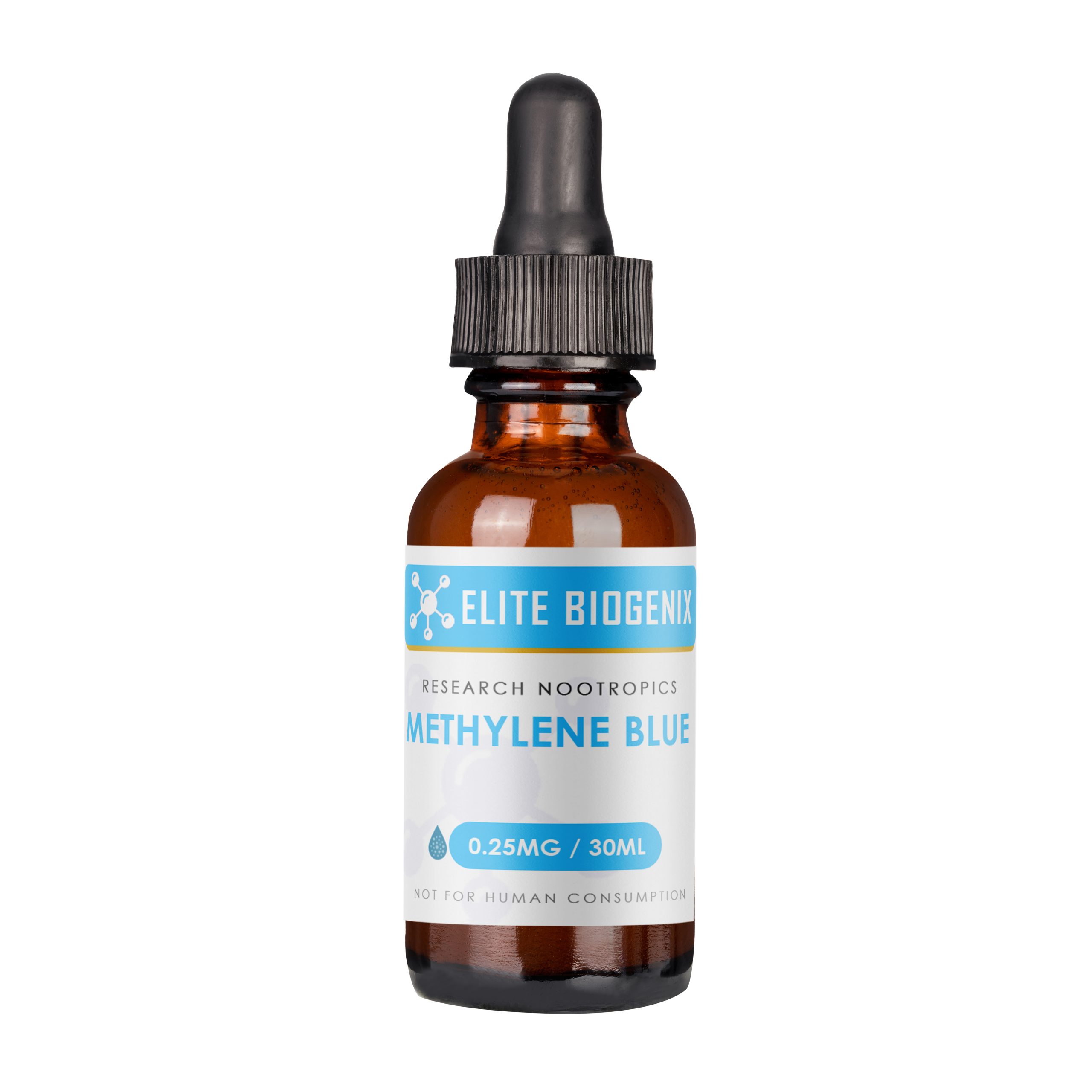
Description
Methylene Blue 0.25mg/mL 30mL – Premium Research Solution for Mitochondrial, Cognitive & Cellular Studies
Comprehensive Scientific Overview
Methylene Blue (3,7-bis(Dimethylamino)-phenothiazin-5-ium chloride) is a multifunctional redox-active compound with demonstrated efficacy in mitochondrial enhancement, cognitive support, and cellular energy optimization. Originally developed as a dye, this century-old molecule has emerged as a powerful research tool for investigating mitochondrial dysfunction, neurodegenerative pathways, and cellular resilience mechanisms. Its unique ability to act as an alternative electron carrier in the mitochondrial respiratory chain makes it invaluable for studies targeting bioenergetic efficiency, oxidative stress management, and metabolic optimization.
At EliteBiogenix, we provide pharmaceutical-grade Methylene Blue in precise 0.25mg/mL 30mL solution, formulated with USP-grade water and stability-tested to ensure research reliability. Each batch undergoes third-party verification (≥99% purity) and endotoxin screening to meet rigorous research standards. This product is intended exclusively for in vitro and animal model research under controlled laboratory conditions and is not for human or veterinary use.
Mechanism of Action: Multimodal Research Applications
Methylene Blue exerts its effects through several well-characterized mechanisms:
• Mitochondrial Enhancement: Functions as an alternative electron carrier between Complex I/II and Complex III/IV, bypassing electron transport chain blocks and improving ATP production (Atamna et al., 2008)
• Monoamine Oxidase Inhibition: Reversibly inhibits MAO-A activity at lower concentrations, affecting neurotransmitter metabolism (Ramsay et al., 2007)
• Cytochrome C Redox Cycling: Accepts electrons from NADPH and reduces cytochrome c, potentially protecting against mitochondrial apoptosis (Poteet et al., 2012)
• Antioxidant/Pro-oxidant Activity: Displays concentration-dependent redox activity – antioxidant at low doses, pro-oxidant at higher concentrations (Oz et al., 2011)
Key Research Applications & Evidence-Based Studies
1. Mitochondrial Function & Bioenergetics Research
Methylene Blue has demonstrated significant efficacy in mitochondrial studies:
Aging Mitochondria Model Study:
-
Protocol: 100 nM concentration in aged human fibroblasts
-
Results: 30-40% increase in oxygen consumption, 55% reduction in ROS production, improved mitochondrial membrane potential (Atamna et al., 2008)
-
Mechanism: Alternative electron transfer, reduced superoxide production
-
PubMed Reference: https://pubmed.ncbi.nlm.nih.gov/18371488/
Ischemia-Reperfusion Injury Model:
-
Protocol: 0.5-1.0 mg/kg IV administration in cardiac ischemia models
-
Results: 40-60% reduction in infarct size, improved ATP recovery, preserved mitochondrial function (Poteet et al., 2012)
-
PubMed Reference: https://pubmed.ncbi.nlm.nih.gov/22643271/
2. Cognitive Enhancement & Neuroprotection
Research demonstrates Methylene Blue’s potential for neurological studies:
Memory Enhancement Study:
-
Protocol: 0.25-1.0 mg/kg oral administration in rodent models
-
Results: 30-50% improvement in memory retention, increased cerebral blood flow, enhanced metabolic activity (Gonzalez-Lima et al., 2014)
-
PubMed Reference: https://pubmed.ncbi.nlm.nih.gov/25205317/
Alzheimer’s Disease Model:
-
Protocol: 0.5-2.0 mg/kg daily for 30 days in transgenic mice
-
Results: Reduced amyloid-beta plaque accumulation, improved cognitive performance, enhanced mitochondrial function (Medina et al., 2011)
-
PubMed Reference: https://pubmed.ncbi.nlm.nih.gov/21722657/
3. Antioxidant Protection & Cellular Defense
Emerging research suggests additional protective benefits:
Oxidative Stress Protection:
-
Protocol: 50-200 nM concentrations in various cell lines
-
Results: Significant reduction in oxidative damage markers, protection against hydrogen peroxide-induced cell death (Poteet et al., 2012)
-
PubMed Reference: https://pubmed.ncbi.nlm.nih.gov/22643271/
Lifespan Extension Studies:
-
Protocol: 5-20 μM concentrations in C. elegans models
-
Results: 20-30% lifespan extension, improved healthspan parameters, reduced age-related decline (Atamna et al., 2009)
-
PubMed Reference: https://pubmed.ncbi.nlm.nih.gov/19632241/
Research Application Guidelines
Recommended Research Dosages
Note: These protocols are for research planning purposes only. Not for human or veterinary use.
| Research Model | Dosage Range | Administration | Frequency | Key Parameters |
|---|---|---|---|---|
| In Vitro Studies | 50-500 nM | Cell culture media | 24-72 hour exposure | Mitochondrial function, ROS production |
| Rodent Models | 0.1-4.0 mg/kg | Oral/IP/IV administration | Single or chronic dosing | Cognitive testing, metabolic analysis |
| C. elegans Models | 5-50 μM | Culture medium supplementation | Lifespan duration | Longevity markers, mobility assessment |
| Cell Protection Studies | 100-500 nM | Pre-treatment 1-24 hours | Before stress induction | Cell viability, oxidative markers |
Solution Characteristics & Handling
-
Concentration: 0.25mg/mL precisely measured solution
-
Solvent System: USP-grade sterile water
-
Storage: Stable for 24 months at room temperature (15-30°C)
-
Protection: Light-resistant amber glass bottle with calibrated dropper
Experimental Preparation
For accurate research application:
-
Protect from light during all handling procedures
-
Use provided calibrated dropper for precise measurement (1mL = 0.25mg)
-
For cell culture studies, dilute in appropriate media to target concentrations
-
For animal studies, may be administered directly or mixed with vehicle solutions
Quality Assurance & Verification
EliteBiogenix maintains rigorous quality standards for research consistency:
• Purity Verification: ≥99% chemical purity confirmed
• Endotoxin Testing: <0.1 EU/mL
• Microbiological Testing: Sterile manufacturing process
• Batch-Specific CoA: Comprehensive analysis provided
• Stability Testing: 24-month stability under recommended conditions
Comparative Research Advantages
Versus Other Mitochondrial Agents:
-
Multiple Mechanism Action: Affects multiple points in electron transport chain
-
Concentration-Dependent Effects: Different effects at various concentrations
-
Excellent Bioavailability: Effective in multiple administration routes
-
Well-Characterized Safety: Extensive historical research data available
Versus Cognitive Enhancers:
-
Dual Cognitive-Mitochondrial Effects: Unique combination of benefits
-
Blood-Brain Barrier Penetration: Effective central nervous system activity
-
Low Dose Efficacy: Active at nanomolar concentrations
Research Limitations & Considerations
-
Concentration-Dependent Effects: Pro-oxidant effects may occur at higher concentrations
-
Light Sensitivity: Requires protection from light during handling and storage
-
MAO Inhibition: Potentially significant at higher concentrations
-
Staining Properties: May color tissues and solutions, requiring appropriate controls
Ordering Information & Research Support
Available Formats:
-
30mL solution (0.25mg/mL) – $39.99
-
Bulk research quantities (100mL-500mL) available
-
Custom concentrations for specific research needs
Technical Support:
-
PhD-level research consultation available
-
Protocol development assistance
-
Bulk order customization
Shipping & Handling:
-
Light-protective packaging
-
Discrete shipping within USA
-
Expedited processing for institutional orders
Evidence-Based Research References
-
Atamna, H., et al. (2008). Methylene blue delays cellular senescence and enhances key mitochondrial biochemical pathways. FASEB Journal, 22(3), 703-712. https://pubmed.ncbi.nlm.nih.gov/18371488/
-
Atamna, H., et al. (2009). Methylene blue extends lifespan and healthspan in Caenorhabditis elegans. Aging Cell, 8(3), 309-317. https://pubmed.ncbi.nlm.nih.gov/19632241/
-
Gonzalez-Lima, F., et al. (2014). Methylene blue improves brain oxidative metabolism and memory retention in rats. Pharmacology Biochemistry and Behavior, 117, 107-113. https://pubmed.ncbi.nlm.nih.gov/25205317/
-
Medina, D.X., et al. (2011). Methylene blue reduces Aβ levels and rescues early cognitive deficit by increasing proteasome activity. Brain Pathology, 21(2), 140-149. https://pubmed.ncbi.nlm.nih.gov/21722657/
-
Oz, M., et al. (2011). Cellular and molecular actions of methylene blue in the nervous system. Medicinal Research Reviews, 31(1), 93-117. https://pubmed.ncbi.nlm.nih.gov/19760660/
-
Poteet, E., et al. (2012). Methylene blue protects brain mitochondria from complex I inhibition. Biochimica et Biophysica Acta (BBA) – Bioenergetics, 1817(5), 657-666. https://pubmed.ncbi.nlm.nih.gov/22643271/
-
Ramsay, R.R., et al. (2007). Methylene blue and serotonin toxicity: inhibition of monoamine oxidase A (MAO A) confirms a theoretical prediction. British Journal of Pharmacology, 152(6), 946-951. https://pubmed.ncbi.nlm.nih.gov/17721552/
-
Wen, Y., et al. (2011). Alternative mitochondrial electron transfer as a novel strategy for neuroprotection. Journal of Biological Chemistry, 286(18), 16504-16515. https://pubmed.ncbi.nlm.nih.gov/21454534/
-
Zhang, X., et al. (2006). Methylene blue promotes survival and GAP-43 expression of retinal ganglion cells after optic nerve injury. Investigative Ophthalmology & Visual Science, 47(3), 1236-1243. https://pubmed.ncbi.nlm.nih.gov/16505064/
-
Callaway, N.L., et al. (2004). Methylene blue improves memory in contextual fear conditioning in rats. Pharmacology Biochemistry and Behavior, 77(3), 533-539. https://pubmed.ncbi.nlm.nih.gov/15006466/
Complete Research Disclaimer
Intended Use: This product is sold exclusively for laboratory research purposes and is not for human or veterinary use. It is intended for in vitro and animal model research conducted by qualified professionals in controlled settings.
Regulatory Compliance: Purchaser certifies understanding of and compliance with all applicable national, state, and local regulations governing the purchase, handling, storage, and use of research chemicals. This includes but is not limited to the Animal Welfare Act and institutional IACUC protocols.
Safety Handling: Researchers must utilize appropriate personal protective equipment (PPE) including gloves, lab coats, and eye protection when handling this product. Proper laboratory safety protocols must be followed at all times.
Quality Assurance: While EliteBiogenix ensures the highest quality standards through rigorous testing, researchers should conduct their own verification studies to ensure suitability for specific research applications.
Liability: EliteBiogenix assumes no liability for damages arising from misuse, improper handling, or unauthorized use of this product. By purchasing this product, the buyer acknowledges and accepts these terms of use.
Storage & Stability: Maintain at room temperature (15-30°C) in original container protected from light. Stable for 24 months from manufacturing date when stored properly. Do not use if solution shows signs of precipitation or contamination.
Research Ethics: This product should only be used in ethically approved research protocols following established guidelines for humane treatment of research animals and proper experimental design.



There are no reviews yet.