

Description
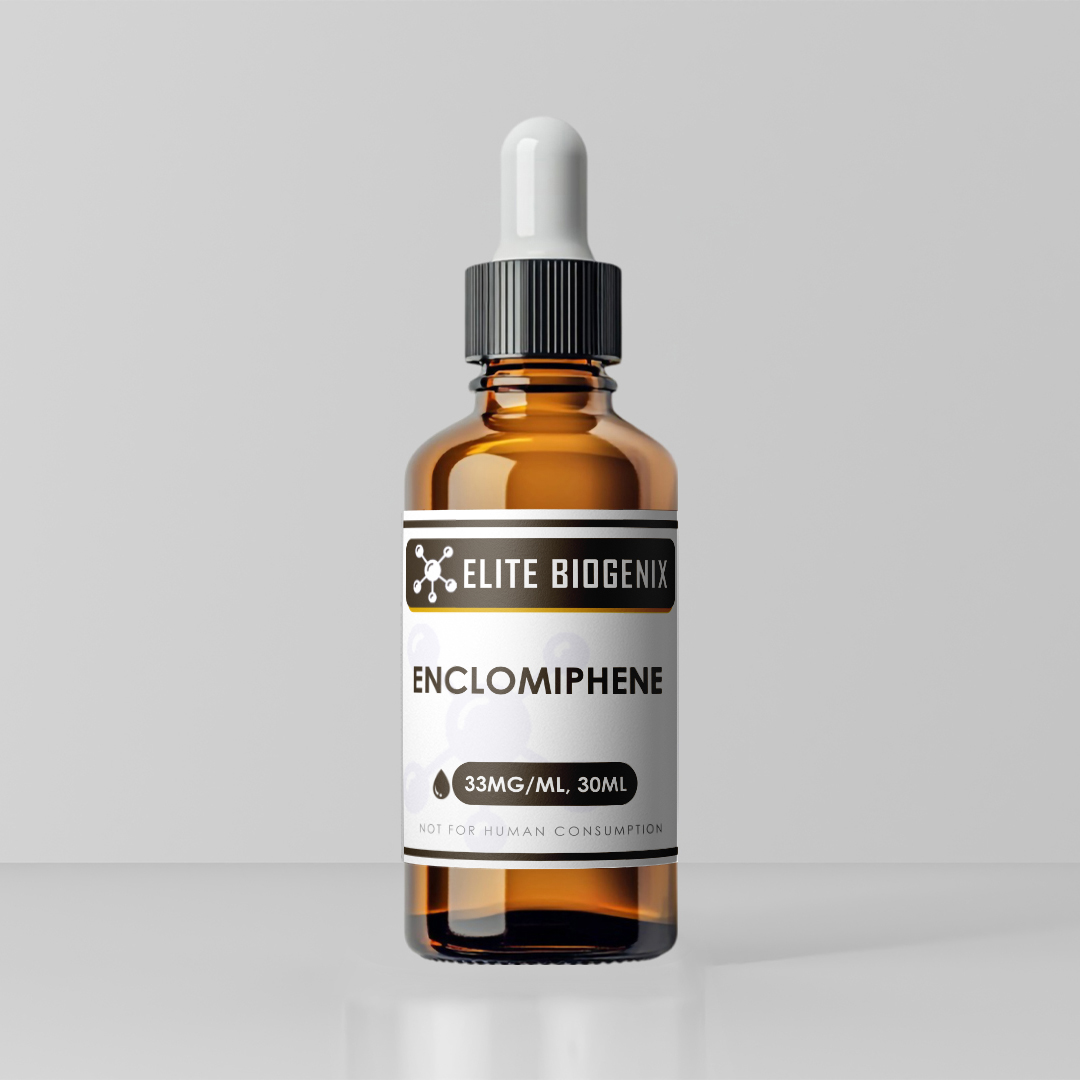
Enclomiphene Citrate – 33mg/mL (30mL) – Selective Estrogen Receptor Antagonist (SERM) for Endocrine and Metabolic Studies
Modulating the Hypothalamic-Pituitary-Gonadal Axis: A Research Guide to Enclomiphene Citrate
Welcome, esteemed researchers, to EliteBiogenix’s detailed examination of a potent and selective research compound: Enclomiphene Citrate. This product is a high-purity, liquid-formulation provided at a concentration of 33mg/mL within a 30mL vehicle, ideal for precise volumetric dosing in laboratory settings. As the trans-isomer of clomiphene, Enclomiphene is a pure Selective Estrogen Receptor Antagonist (SERM) that offers a unique tool for investigating the endocrine system, specifically the hypothalamic-pituitary-gonadal (HPG) axis. This product description serves as a foundational research primer to guide your experimental design in endocrinology, reproductive biology, and metabolic studies.
Section 1: The Scientific Basis of Enclomiphene’s Mechanism of Action
Enclomiphene’s research value lies in its specific and potent antagonism of estrogen receptors, particularly at the level of the hypothalamus. Unlike its counterpart zuclomiphene, which has mixed agonist/antagonist properties, Enclomiphene functions primarily as an antagonist in the context of the HPG axis. Its mechanism is pivotal for studies on endocrine feedback loops.
-
Antagonism of Hypothalamic Estrogen Receptors: In mammalian physiology, estrogen exerts a powerful negative feedback signal on the hypothalamus, suppressing the pulsatile release of Gonadotropin-Releasing Hormone (GnRH). Enclomiphene competes with endogenous estrogen for binding at hypothalamic estrogen receptors. By blocking these receptors, it prevents estrogen from delivering its inhibitory signal.
-
Stimulation of Pituitary Gonadotropin Secretion: The disinhibition of the hypothalamus leads to an increased amplitude and frequency of GnRH pulses. This heightened GnRH signal acts on the anterior pituitary gland, stimulating the synthesis and secretion of the primary gonadotropins: Luteinizing Hormone (LH) and Follicle-Stimulating Hormone (FSH).
-
Direct Effects on Gonadal Function: The surge in circulating LH and FSH then acts upon the gonads (testes in males, ovaries in females). In testicular Leydig cells, LH stimulates the production and secretion of testosterone. In Sertoli cells, FSH supports spermatogenesis. This cascade makes Enclomiphene a valuable compound for research models investigating gonadal stimulation, steroidogenesis, and fertility.
The specificity of Enclomiphene for this axis makes it a cleaner research tool compared to mixed-isomer clomiphene citrate, allowing for more precise interpretation of experimental results related to endocrine feedback mechanisms.
Section 2: Key Research Applications for Enclomiphene
Our 30mL vial of Liquid Enclomiphene (33mg/mL) is designed for controlled in-vitro and ex-vivoresearch applications. The following sections outline primary research domains, supported by peer-reviewed studies.
2.1 Investigating the Stimulation of Endogenous Testosterone Production
A primary area of research with Enclomiphene involves its potential to elevate endogenous testosterone levels by disrupting the estrogen-mediated negative feedback loop. This is relevant for studies on hypogonadism and hormonal regulation.
-
Relevant Study: *Wiehle, R. D., Fontenot, G. K., Wike, J., Hsu, K., Nydell, J., Lipshultz, L., & Khera, M. (2014). Enclomiphene citrate stimulates testosterone production while preventing spermatogenic suppression in men treated with a GnRH antagonist and testosterone. Journal of Andrology, 35(1), 49-56.*
-
PubMed Link: https://pubmed.ncbi.nlm.nih.gov/24000099/
-
Focus of Research: This clinical trial evaluated the efficacy of Enclomiphene citrate in maintaining testosterone production in men who were also receiving a testosterone-suppressing agent (a GnRH antagonist).
-
Key Findings: The study demonstrated that Enclomiphene citrate was effective at stimulating the HPG axis, leading to a significant increase in serum testosterone and LH levels, even in the presence of a GnRH antagonist. This confirms its potent central action.
-
Research Implication: For in-vitro research, this translates to using Enclomiphene in pituitary cell culture models (e.g., LβT2 mouse pituitary cell line) to directly measure the increase in LH and FSH secretion via ELISA. Researchers can also use testicular explant or Leydig cell cultures (e.g., MA-10 mouse Leydig tumor cells or primary Leydig cells) to study the downstream effects of increased gonadotropin exposure on testosterone production.
-
Estimated Compound Usage for In-Vitro Replication: Effective concentrations in cell culture models can vary. A starting range of 1-10 µM is common for studying direct receptor interactions. For a 10 mL culture at 10 µM, this would require approximately 0.16 mg of Enclomiphene base. Our 30mL vial at 33mg/mL provides a total of 990 mg, allowing for extensive, long-term dose-response studies and the creation of concentrated stock solutions.
-
2.2 Research on Male Fertility and Spermatogenesis
Because FSH is critical for the maintenance of spermatogenesis, Enclomiphene’s ability to elevate FSH makes it a compound of interest for fertility research models.
-
Relevant Study: *Roth, L. W., Ryan, A. R., & (2013). Enclomiphene citrate for the treatment of secondary male hypogonadism. Expert Opinion on Investigational Drugs, 22(11), 1421-1432.*
-
PubMed Link: https://pubmed.ncbi.nlm.nih.gov/24033175/
-
Focus of Research: This review article consolidates data from multiple studies on Enclomiphene’s effects. It highlights findings that Enclomiphene not only restores testosterone to eugonadal levels but also maintains or increases sperm counts, unlike exogenous testosterone supplementation which suppresses spermatogenesis.
-
Key Findings: The compiled evidence indicates that Enclomiphene citrate effectively treats secondary hypogonadism while preserving testicular volume and semen parameters, making it a unique research tool for models of fertility preservation.
-
Research Implication: Researchers can use our Enclomiphene in Sertoli cell cultures or organotypic testicular cultures to investigate its impact on Sertoli cell function, such as the secretion of androgen-binding protein (ABP) and the support of germ cell viability. This allows for a direct examination of FSH-mediated effects on the spermatogenic microenvironment.
-
Estimated Compound Usage for In-Vitro Replication: Spermatogenesis is a complex, long-term process. Studies using testicular explants may require culture periods of several days to weeks with continuous exposure to Enclomiphene at concentrations of 1-5 µM. The large volume and high concentration of our product are ideal for such sustained experiments.
-
2.3 Exploring Metabolic and Body Composition Effects
The interplay between sex hormones and metabolism is a rich area of scientific inquiry. Testosterone is known to influence body composition, insulin sensitivity, and lipid metabolism.
-
Relevant Study: *Kim, E. D., McCullough, A., & Kaminetsky, J. (2016). Oral Enclomiphene Citrate Raises Testosterone and Preserves Sperm Counts in Obese Men with Secondary Hypogonadism. The Aging Male, 19(3), 155-163.**
-
PubMed Link: https://pubmed.ncbi.nlm.nih.gov/27215736/
-
Focus of Research: This study examined the effects of Enclomiphene citrate in obese men with low testosterone levels, a population often exhibiting metabolic syndrome components.
-
Key Findings: Treatment with Enclomiphene citrate successfully increased serum testosterone levels. While the primary endpoint was hormonal, studies like this form the basis for further research into how elevating endogenous testosterone via SERMs can impact metabolic parameters like insulin resistance and body fat distribution.
-
Research Implication: Researchers can use our Enclomiphene in adipocyte (fat cell) culture models, such as 3T3-L1 cells, to investigate potential direct effects of the compound on adipogenesis (fat cell formation) and lipolysis (fat breakdown). Co-culture systems of adipocytes and hypothalamic cells could also be used to model the complex endocrine-metabolic cross-talk.
-
Estimated Compound Usage for In-Vitro Replication: Metabolic studies in cell culture often use similar concentration ranges to endocrine studies (1-10 µM). The liquid format of our product simplifies adding precise, small volumes directly to culture media, minimizing solvent interference and ensuring consistent exposure.
-
2.4 Comparative Studies with Other Endocrine Modulators
Enclomiphene serves as a critical comparator in research involving other hormonal agents, such as Aromatase Inhibitors (AIs) like Anastrozole or other SERMs like Tamoxifen.
-
Research Application: A key research question is the differential impact of blocking estrogen production (via AIs) versus blocking estrogen reception (via SERMs) on the HPG axis and end-organ tissues. Enclomiphene, with its pure antagonistic profile, is the ideal SERM for such comparative studies.
-
Experimental Design: Researchers can design in-vitro experiments using pituitary cell lines to compare the LH/FSH response to Enclomiphene versus an AI. Similarly, studies can be designed in bone cell cultures (osteoblasts/osteoclasts) to compare the tissue-specific estrogenic/anti-estrogenic effects of Enclomiphene versus other SERMs, which may have more mixed agonist effects in bone.
Section 3: Synergistic Research: Enclomiphene and Other Compounds
A sophisticated research approach often involves studying combinations of compounds to explore synergistic or additive effects.
-
With Aromatase Inhibitors (AIs): Research could investigate if combining a central HPG axis stimulator (Enclomiphene) with a peripheral inhibitor of testosterone-to-estrogen conversion (an AI) has a synergistic effect on elevating the Testosterone to Estrogen (T:E) ratio in relevant cell culture or explant models.
-
With hCG (Human Chorionic Gonadotropin): In testicular culture models, research could explore the potential synergistic effects of direct Leydig cell stimulation (with hCG) and central HPG axis disinhibition (simulated by adding Enclomiphene to pituitary co-cultures).
-
With Selective Androgen Receptor Modulators (SARMs): Research could be designed to study the effects of co-administration, particularly to investigate if Enclomiphene can mitigate potential HPG axis suppression caused by certain SARMs in experimental models.
Section 4: EliteBiogenix Quality and Specifications
Product Specification:
-
Compound Name: Enclomiphene Citrate
-
Concentration: 33mg/mL
-
Volume: 30mL
-
Vehicle: Proprietary research solution (details on CoA)
-
Purity: ≥98% (HPLC Verified)
-
Form: Liquid solution
-
Storage: Store at room temperature (20-25°C). Protect from light. Do not freeze. Ensure the cap is tightly sealed.
-
Handling: Use within a laminar flow hood for sterile applications. Aliquot to avoid repeated freeze-thaw cycles if necessary.
Why Choose EliteBiogenix for Your Enclomiphene Research?
-
Superior Formulation: Our liquid Enclomiphene is provided in a stable, ready-to-use vehicle, eliminating the need for researchers to perform complex and potentially hazardous weighing and solubilization procedures.
-
Precision and Consistency: The liquid format allows for highly precise, volumetric dosing using standard laboratory pipettes, ensuring consistency and reproducibility across your experiments.
-
Uncompromising Purity: Every batch is independently verified via HPLC to ensure you are working with a precisely defined, high-purity compound, free from significant zuclomiphene contamination.
-
Research-Focused: We cater exclusively to the scientific community. Our products, packaging, and documentation are designed for laboratory use, providing the data and quality required for rigorous scientific investigation.
Section 5: Conclusion and Research Direction
This 30mL vial of Liquid Enclomiphene Citrate (33mg/mL) from EliteBiogenix provides a potent and specific tool for advanced research in endocrinology and metabolism. Its pure antagonistic action at hypothalamic estrogen receptors makes it an invaluable compound for dissecting the complexities of the HPG axis, studying gonadal function, and exploring the metabolic roles of sex hormones. Research with Enclomiphene continues to illuminate the delicate balance of endocrine feedback loops and their systemic effects.
We are committed to supporting your important work with the highest quality, most convenient research materials available.
Order your vial of Liquid Enclomiphene Citrate today and advance your research into endocrine signaling and metabolic regulation.
Remember: EliteBiogenix.com products are for laboratory research use only. Not for human or veterinary consumption.







There are no reviews yet.