

Description
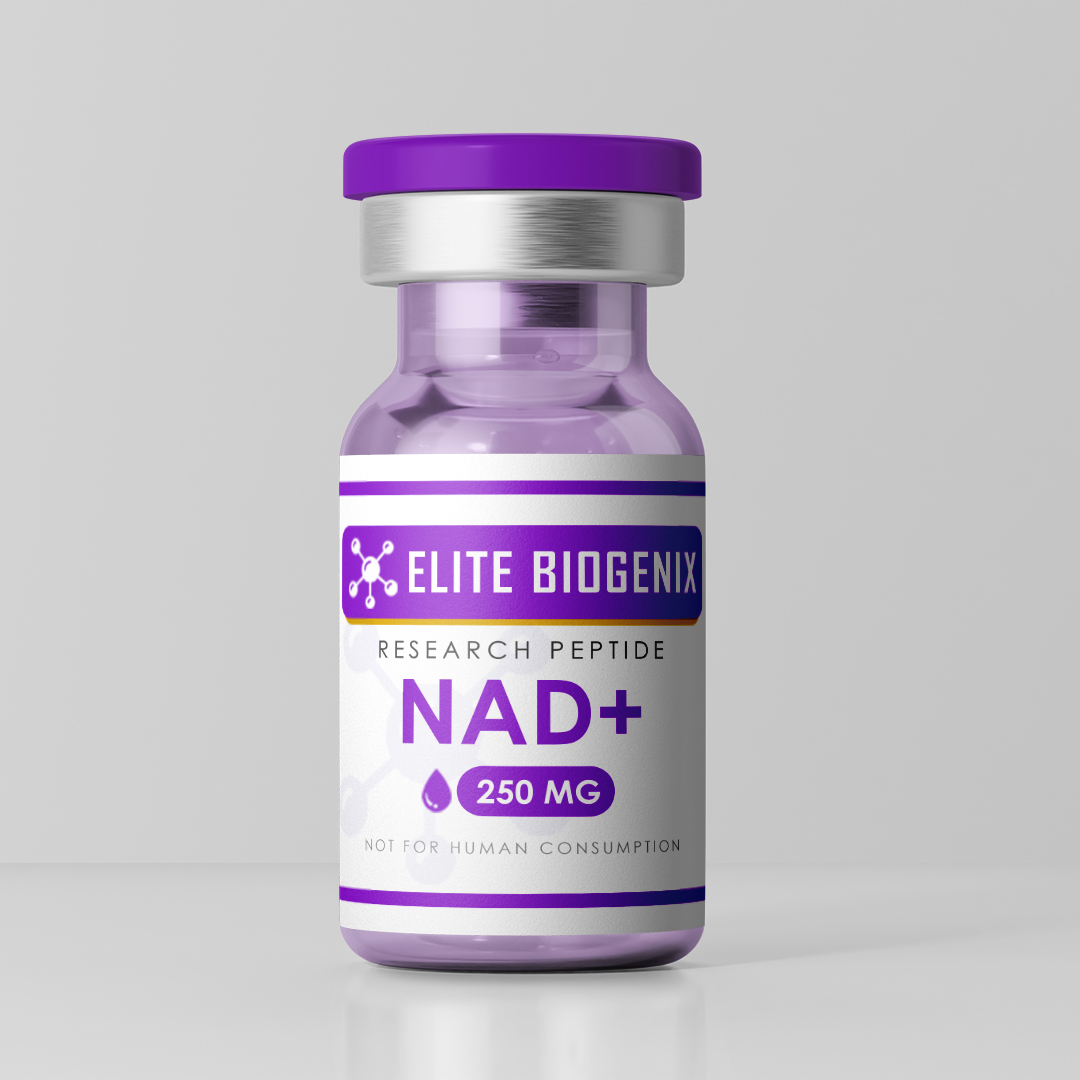
NAD+ (Beta-Nicotinamide Adenine Dinucleotide) – 250mg High-Purity Research Grade Compound
Unlocking Cellular Potential: A Comprehensive Research Guide to High-Purity NAD+ (250mg)
Welcome, esteemed researchers, to EliteBiogenix’s detailed exploration of one of the most pivotal molecules in cellular biochemistry: Beta-Nicotinamide Adenine Dinucleotide, or NAD. This 250mg vial contains a high-purity, research-grade compound essential for investigations into aging, metabolism, DNA repair, and cellular resilience. As a cornerstone of redox reactions and a critical substrate for signaling enzymes, NAD offers a vast landscape for scientific inquiry. This product description serves as a foundational research primer to guide your experimental design.
Section 1: The Fundamental Role of NAD in Cellular Mechanics
NAD is an essential coenzyme found in every living cell. Its primary roles can be categorized into two fundamental processes:
-
Redox Reactions and Energy Metabolism: NAD functions as a crucial electron carrier. It shuttles electrons during the catabolic breakdown of glucose, fatty acids, and amino acids, primarily in the mitochondrial electron transport chain. This process is fundamental for the generation of adenosine triphosphate (ATP), the primary energy currency of the cell. A cell’s NAD/NADH ratio is a critical indicator of its metabolic and redox state. Research focusing on metabolic pathways must account for this ratio to understand cellular energy production and oxidative stress.
-
Substrate for Signaling Enzymes (NAD+-Consuming Enzymes): Beyond its role in energy production, NAD serves as an essential substrate for several key signaling enzymes. The most prominent are the sirtuins (SIRT1-7 in mammals) and poly (ADP-ribose) polymerases (PARPs). These enzymes are involved in critical cellular processes:
-
Sirtuins: Often called “longevity genes,” sirtuins are deacetylases that rely on NAD+ to function. Their activity influences gene expression, DNA repair, metabolic regulation, and stress resistance. Sirtuin activation is a primary area of interest in anti-aging research.
-
PARPs: Primarily involved in DNA repair. In response to DNA damage, PARP enzymes consume large quantities of NAD to facilitate repair mechanisms. Understanding NAD+ availability is crucial in studies of genotoxic stress and cellular recovery.
-
CD38/157: These are ectoenzymes that break down NAD and are involved in calcium signaling and immune response. Their activity can significantly impact intracellular NAD levels.
-
A central hypothesis in modern biogerontology is that NAD bioavailability declines with age. This decline is thought to contribute to the hallmarks of aging, including mitochondrial dysfunction, epigenetic alterations, and loss of proteostasis. Therefore, research compounds like this high-purity NAD are vital tools for investigating strategies to maintain or restore NAD levels in experimental models.
**Section 2: Key Research Applications for NAD+
Our 250mg vial of NAD is designed for a wide array of in-vitro research applications. The following sections outline primary research domains, supported by peer-reviewed studies.
2.1 Investigating Mitochondrial Function and Biogenesis
Mitochondrial health is synonymous with cellular vitality. NAD is a direct precursor for NADH, which fuels the electron transport chain. Furthermore, NAD activates SIRT1 and SIRT3, which deacetylate and activate key transcription factors like PGC-1α, a master regulator of mitochondrial biogenesis.
-
Relevant Study: *Cantó, C., Houtkooper, R. H., Pirinen, E., Youn, D. Y., Oosterveer, M. H., Cen, Y., Fernandez-Marcos, P. J., Yamamoto, H., Andreux, P. A., Cettour-Rose, P., Gademann, K., Rinsch, C., Schoonjans, K., Auwerx, J., & (2012). The NAD(+) precursor nicotinamide riboside enhances oxidative metabolism and protects against high-fat diet-induced obesity. Cell Metabolism, 15(6), 838–847.*
-
PubMed Link: https://pubmed.ncbi.nlm.nih.gov/22682224/
-
Focus of Research: This study investigated the effects of nicotinamide riboside (NR), a precursor to NAD+, on mitochondrial function.
-
Key Findings: The research demonstrated that NR supplementation in a mouse model increased mitochondrial oxidative metabolism in skeletal muscle, prevented high-fat diet-induced obesity, and improved insulin sensitivity. This underscores the critical link between NAD availability and mitochondrial health.
-
Research Implication: When using our pure NAD in cell culture models, researchers can directly test its impact on mitochondrial density, oxygen consumption rate (OCR), and expression of genes like PGC-1α, TFAM, and NRF1. This bypasses the need for precursor conversion, allowing for direct assessment of NAD+’s effects.
-
Estimated Compound Usage for In-Vitro Replication: A typical cell culture study might aim to increase NAD concentrations in media by 0.1-1.0 mM. For a 10 mL culture, this would require 1-10 mg of NAD. Our 250mg vial allows for multiple replicates and dose-response curves in such a setup.
-
2.2 Exploring DNA Repair Mechanisms and Genomic Stability
Genomic instability is a key hallmark of aging. PARP enzymes are major consumers of NAD in the nucleus, using it to synthesize poly(ADP-ribose) chains on target proteins to flag sites of DNA damage and recruit repair machinery.
-
Relevant Study: *Fang, E. F., Kassahun, H., Croteau, D. L., Scheibye-Knudsen, M., Marosi, K., Lu, H., Shamanna, R. A., Kalyanasundaram, S., Bollineni, R. C., Wilson, M. A., Iser, W. B., Wollman, B. N., Morevati, M., Li, J., Kerr, J. S., Lu, Q., Waltz, T. B., Tian, J., Sinclair, D. A., … Bohr, V. A. (2016). NAD+ replenishment improves lifespan and healthspan in ataxia telangiectasia models via mitophagy and DNA repair. Cell Metabolism, 24(4), 566–581.*
-
PubMed Link: https://pubmed.ncbi.nlm.nih.gov/27641062/
-
Focus of Research: This study examined the role of NAD+ in a model of the neurodegenerative disease ataxia telangiectasia (A-T), which involves defective DNA repair.
-
Key Findings: The researchers found that boosting NAD+ levels with precursors like NR improved DNA repair capacity, enhanced mitophagy (the removal of damaged mitochondria), and extended lifespan in animal models of A-T. This highlights NAD+’s role in maintaining genomic integrity.
-
Research Implication: Using our pure NAD+ in cell lines subjected to genotoxic stress (e.g., UV radiation, chemical agents) allows for direct measurement of PARP activity, DNA damage markers (e.g., γH2AX), and cell survival rates. This provides a clear model to test how direct NAD+ administration influences DNA repair pathways.
-
Estimated Compound Usage for In-Vitro Replication: Studies inducing DNA damage often use higher concentrations to ensure a measurable effect. Concentrations of 0.5-2.0 mM in culture media are common. A 250mg vial is sufficient for numerous experiments, including pre-treatment and co-treatment protocols across multiple cell lines.
-
2.3 Studying Sirtuin-Mediated Pathways in Cellular Aging
Sirtuins are NAD dependent deacetylases that link cellular energy status to gene expression. SIRT1 (primarily nuclear) and SIRT3 (primarily mitochondrial) are heavily implicated in stress resistance and metabolic regulation.
-
Relevant Study: *Mouchiroud, L., Houtkooper, R. H., Moullan, N., Katsyuba, E., Ryu, D., Cantó, C., Mottis, A., Jo, Y. S., Viswanathan, M., Schoonjans, K., Guarente, L., & Auwerx, J. (2013). The NAD(+)/sirtuin pathway modulates longevity through activation of mitochondrial UPR and FOXO signaling. Cell, 154(2), 430–441.*
-
PubMed Link: https://pubmed.ncbi.nlm.nih.gov/23870130/
-
Focus of Research: This research explored how the NAD+/sirtuin pathway influences longevity in C. elegans (a nematode model organism).
-
Key Findings: The study demonstrated that boosting NAD+ levels activated sirtuins, which in turn triggered a mitochondrial unfolded protein response (UPRmt) and FOXO signaling, leading to an extension of lifespan. This provides a mechanistic link between NAD+, cellular stress response pathways, and organismal aging.
-
Research Implication: In mammalian cell cultures, researchers can use our NAD+ to directly assess sirtuin activity. This can be measured through downstream effects like the deacetylation of specific sirtuin targets (e.g., p53 for SIRT1, SOD2 for SIRT3) and subsequent changes in gene expression profiles related to stress resistance and metabolism.
-
Estimated Compound Usage for In-Vitro Replication: Activating sirtuin pathways often requires sustained, moderate increases in NAD+. Concentrations ranging from 0.2-1.0 mM are typically used in cell culture over 24-72 hours. The 250mg quantity ensures researchers can conduct long-term culture studies with frequent media changes containing fresh NAD+.
-
2.4 Neuroprotection and Cognitive Function Research
The brain is a highly metabolically active organ, making it particularly susceptible to changes in NAD availability. Research has linked NAD+ decline to various neurodegenerative conditions.
-
Relevant Study: *Hou, Y., Lautrup, S., Cordonnier, S., Wang, Y., Croteau, D. L., Zavala, E., Zhang, Y., Moritoh, K., O’Connell, J. F., Baptiste, B. A., Stevnsner, T. V., Mattson, M. P., & Bohr, V. A. (2018). NAD+ supplementation normalizes key Alzheimer’s features and DNA damage responses in a new AD mouse model with introduced DNA repair deficiency. Proceedings of the National Academy of Sciences of the United States of America, 115(8), E1876–E1885.**
-
PubMed Link: https://pubmed.ncbi.nlm.nih.gov/29432159/
-
Focus of Research: This study investigated the impact of NAD+ supplementation on a novel mouse model combining Alzheimer’s disease (AD) pathology with DNA repair deficiency.
-
Key Findings: NAD+ precursor supplementation (NR) was shown to reduce tau pathology, improve cognitive function, and restore DNA repair capacity in the mouse model. This suggests that NAD+ replenishment could target multiple pathological pathways in neurodegeneration.
-
Research Implication: Using our NAD+ in neuronal cell cultures or brain slice preparations allows for direct testing of its effects on tau phosphorylation, amyloid-beta toxicity, synaptic plasticity, and neuronal survival under stress conditions (e.g., oxidative stress, nutrient deprivation).
-
Estimated Compound Usage for In-Vitro Replication: Primary neuronal cultures are sensitive, often requiring lower concentrations. Studies might use 0.05-0.5 mM NAD+. The high purity of our product is critical for these sensitive cellular models, and the 250mg size allows for extensive experimentation.
-
Section 3: Synergistic Research: NAD+ and Other Research Compounds
A sophisticated research approach often involves studying combinations of compounds to explore synergistic effects.
-
With Resveratrol: Resveratrol is a well-known activator of SIRT1. However, its efficacy is dependent on NAD+ availability. Research combining NAD with Resveratrol can investigate potentiation of sirtuin activity.
-
With Metformin: Metformin, an activator of AMPK, influences cellular energy status. Research can be designed to see how modulating the AMPK pathway (with Metformin) interacts with the NAD+/sirtuin axis.
-
With other NAD+ Precursors (e.g., NMN): While we offer pure NAD+, researchers may also be interested in its precursors like Nicotinamide Mononucleotide (NMN). Comparative studies can be designed to assess the efficiency of direct NAD+ application versus precursor conversion in different cell types.
Section 4: EliteBiogenix Quality and Specifications
Product Specification:
-
Compound Name: Beta-Nicotinamide Adenine Dinucleotide (Disodium Salt)
-
Purity: ≥98% (HPLC Verified)
-
Molecular Formula: C21H27N7Na2O14P2
-
Molecular Weight: 663.4 g/mol
-
Form: White to off-white lyophilized powder
-
Storage: Store at -20°C or below. Desiccate. Protect from light.
-
Solubility: Soluble in water. For best results, prepare fresh solutions for each experiment.
Why Choose EliteBiogenix for Your NAD+ Research?
-
Uncompromising Purity: Every batch is independently verified via HPLC and Mass Spectrometry to ensure you are working with a precisely defined compound.
-
Strict Quality Control: Our products undergo rigorous testing for contaminants, including heavy metals, endotoxins, and residual solvents, providing consistency crucial for reproducible results.
-
Research-Focused: We cater exclusively to the scientific community. Our products, packaging, and documentation are designed for laboratory use.
-
Transparency: We provide detailed Certificates of Analysis (CoA) for every product lot, giving you full insight into the specifications of the material you are using.
Section 5: Conclusion and Research Direction
This 250mg vial of high-purity NAD+ from EliteBiogenix represents a fundamental tool for cutting-edge research into the biology of aging, metabolism, and cellular defense. The decline of NAD is a conserved feature of aging across model organisms, making its study directly relevant to understanding the fundamental mechanisms of age-related decline. By providing a direct source of this essential coenzyme, we empower researchers to design elegant experiments that probe the intricacies of sirtuin signaling, PARP-mediated DNA repair, and mitochondrial energetics.
The studies cited herein are just a starting point. The future of NAD research lies in understanding its cell-type-specific effects, its interplay with other metabolic pathways, and its potential role in combination therapies. We are committed to supporting your important work with the highest quality research materials.
Order your vial of NAD+ (250mg) today and advance your research into the core mechanisms of cellular health and longevity.
Remember: EliteBiogenix.com products are for laboratory research use only. Not for human or veterinary consumption.


There are no reviews yet.