

Description
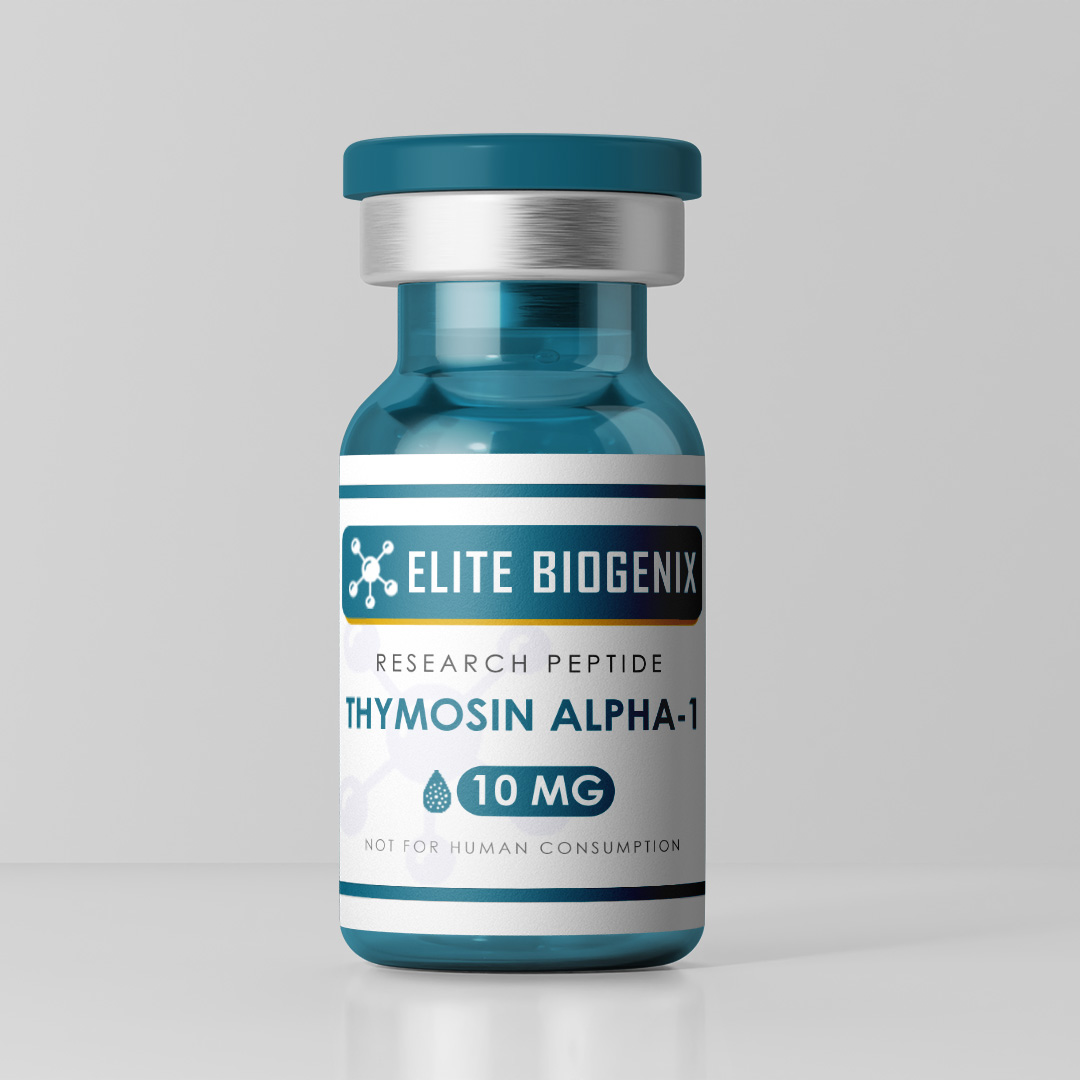
Thymosin Alpha-1 Research Peptide (99% Purity) – EliteBiogenix.com
Premium Synthetic Peptide for Advanced Immunological, Anti-Aging, and Oncological Research
Welcome to EliteBiogenix, your trusted source for high-purity, research-grade biochemicals. Our Thymosin Alpha-1 (TA-1) Research Peptide is a highly purified, synthetic 28-amino acid peptide (Ac-Ser-Asp-Ala-Ala-Val-Asp-Thr-Ser-Ser-Glu-Ile-Thr-Thr-Lys-Asp-Leu-Lys-Glu-Lys-Lys-Glu-Val-Val-Glu-Glu-Ala-Glu-Asn-OH) with profound immunomodulatory properties. Originally isolated from the thymus gland, TA-1 has become a critical compound in preclinical immunological and anti-aging research due to its ability to modulate immune function, reduce inflammation, and potentially counteract age-related immune decline (immunosenescence).
This product is designed and manufactured exclusively for scientific investigation in controlled laboratory environments. It is intended for research purposes only and is not for human or veterinary consumption, diagnosis, or treatment of any medical condition.
CRITICAL NOTICE: This product is sold strictly for research purposes only. It is to be used solely by qualified researchers in controlled laboratory settings. By purchasing this product, you confirm that you are aware of its intended use and will adhere to all applicable local, state, and federal regulations governing the use of research chemicals.
Our Thymosin Alpha-1 is synthesized to the highest standards and undergoes rigorous third-party High-Performance Liquid Chromatography (HPLC) and Mass Spectrometry analysis to ensure ≥99% purity, providing exceptional reliability and consistency for your most sensitive scientific studies on immune system function and cellular aging.
Research Focus: The Multifaceted Role of Thymosin Alpha-1 in Immunology and Beyond
Thymosin Alpha-1 represents a cornerstone of modern immunomodulation research with demonstrated effects across multiple physiological systems. Its research applications span several critical areas of modern biomedical science:
-
Immunomodulation & Immune System Reconstitution: Investigating mechanisms of T-cell differentiation, maturation, and cytokine production in models of immune deficiency.
-
Anti-Aging & Immunosenescence: Researching the peptide’s potential to reverse or mitigate the age-related decline in immune function and increase resistance to infection.
-
Oncological Research & Adjunct Therapy: Studying its role in enhancing anti-tumor immune responses and potentially improving outcomes in combination with other therapies.
-
Anti-Inflammatory & Anti-Septic Actions: Exploring its powerful effects in modulating cytokine storms and improving survival in models of severe sepsis and systemic inflammation.
-
Viral Immunology: Examining its potential to enhance vaccine response and modulate immune activity during chronic viral infections.
This highly pure Thymosin Alpha-1 provides researchers with a reliable tool to investigate these complex immunological processes in controlled in vitro and preclinical models.
1. Thymosin Alpha-1 as an Immunomodulator and T-Cell Activator
Mechanism of Action:
Thymosin Alpha-1 exerts its primary effects through sophisticated modulation of the immune system, with a particular focus on T-lymphocytes:
-
T-Cell Maturation & Differentiation: Promotes the maturation of T-cell precursors in the thymus and enhances the differentiation of CD4+ helper T-cells and CD8+ cytotoxic T-cells, which are essential for adaptive immunity.
-
Cytokine Regulation: Modulates the production of key cytokines, including increasing interferon-gamma (IFN-γ), interleukin-2 (IL-2), and interleukin-12 (IL-12) while decreasing pro-inflammatory cytokines like tumor necrosis factor-alpha (TNF-α) and interleukin-1 (IL-1).
-
Enhancement of Dendritic Cell Function: Improves the antigen-presenting capacity of dendritic cells, bridging the innate and adaptive immune responses.
-
Stimulation of Natural Killer (NK) Cell Activity: Increases the cytotoxicity of NK cells, enhancing the innate immune system’s ability to target infected or malignant cells.
Research Applications & Key Studies:
-
Immune Reconstitution in Immunodeficiency Models: Studies have shown TA-1’s efficacy in restoring immune function in models of chemotherapy-induced immunosuppression or age-related immunosenescence.
-
Study: Thymosin alpha1: an endogenous regulator of inflammation, immunity, and tolerance
-
Research Dosage: 0.5 – 1 mg/kg administered subcutaneously, twice weekly for 2-4 weeks in murine models.
-
-
Enhancement of Vaccine Response: Research indicates that TA-1 can act as an adjuvant, significantly improving humoral and cellular immune responses to vaccines in preclinical models.
-
Study: Thymosin alpha 1 as an adjuvant to hepatitis B vaccination (Clinical study reference; preclinical doses are scaled).
-
Preclinical Research Dosage Equivalent: 50 – 200 µg/kg administered subcutaneously concurrently with antigen.
-
Suggested Research Protocols for Immunomodulation:
-
Immunodeficiency models: 0.5 – 1 mg/kg administered via subcutaneous injection, twice weekly for 3-4 weeks.
-
Vaccine adjuvant studies: 100 – 200 µg/kg administered subcutaneously at the time of vaccination.
Best for: Investigating mechanisms of T-cell biology, developing adjuvants, studying immune reconstitution, and models of primary or secondary immunodeficiency.
2. Thymosin Alpha-1 in Anti-Aging and Immunosenescence Research
Mechanism of Action:
Aging is characterized by a progressive decline in immune competence, known as immunosenescence. TA-1 is a leading compound for research in this field:
-
Reversal of Thymic Atrophy: The thymus gland atrophies with age, drastically reducing T-cell output. TA-1 has been shown to promote thymic regeneration and increase thymic mass and cellularity in aged animal models.
-
Restoration of Naive T-Cell Pools: Helps replenish the pool of naïve T-cells, which is essential for responding to new pathogens.
-
Reduction of Inflammatory Aging (“Inflammaging”): Counteracts the chronic, low-grade inflammation associated with aging by modulating pro-inflammatory cytokine production.
-
Enhancement of Immune Surveillance: Improves the ability of the aged immune system to identify and eliminate precancerous and senescent cells.
Research Applications & Key Studies:
-
Reversal of Age-Related Immune Decline: Studies in aged mice have demonstrated that TA-1 treatment can restore youthful immune parameters, including T-cell proliferation and cytokine production.
-
Study: Thymosin alpha 1 rejuvenates aged immunogenicity and reduces tumor growth
-
Research Dosage: 1 mg/kg administered subcutaneously, twice weekly for 4-6 weeks in aged murine models.
-
-
Extension of Healthspan and Infection Resistance: Research indicates treated aged models show improved survival and reduced morbidity following challenge with pathogens.
-
Study: Thymosin α1 therapy in critically ill patients with COVID-19 (Clinical example of immune modulation; mechanistic basis is relevant).
-
Preclinical Aging Research Dosage: 0.5 – 1 mg/kg administered 2-3 times per week.
-
Suggested Research Protocols for Aging Studies:
-
Aged animal models (20+ month mice): 1 mg/kg administered subcutaneously, twice weekly for a minimum of 4 weeks to observe thymic and immune functional changes.
-
Models of infection in aged hosts: 0.5 mg/kg administered daily or every other day starting prior to or immediately after pathogen challenge.
Best for: Research on immunosenescence, inflammaging, thymic regeneration, and interventions to extend immunological healthspan.
3. Thymosin Alpha-1 in Oncological and Adjunct Therapy Research
Mechanism of Action:
TA-1’s role in cancer research focuses on boosting the host’s anti-tumor immunity rather than direct cytotoxicity:
-
Enhancement of Tumor-Infiltrating Lymphocytes (TILs): Promotes the migration and activity of T-cells within the tumor microenvironment.
-
Attenuation of Myeloid-Derived Suppressor Cells (MDSCs): Can reduce the population of these immune-suppressive cells that are prevalent in many cancers.
-
Synergy with Checkpoint Inhibitors: Preclinical data suggests it may enhance the efficacy of PD-1/PD-L1 blockade therapies by creating a more immunogenic tumor microenvironment.
-
Reduction of Chemotherapy-Induced Immunosuppression: Helps protect the immune system from the damaging effects of cytotoxic cancer therapies.
Research Applications & Key Studies:
-
Adjunct to Cancer Immunotherapy: Studies in murine tumor models (e.g., melanoma, lung carcinoma) have shown that TA-1 can slow tumor growth and improve survival when combined with other therapies.
-
Study: Thymosin α1 in combination with PD-1 blockade enhances antitumor immune response
-
Research Dosage: 200 – 400 µg/kg administered subcutaneously, every other day or twice weekly, concurrently with immunotherapy.
-
-
Mitigation of Cancer-Related Immune Suppression: Research shows it can improve immune parameters in models bearing large tumor burdens.
-
Study: Thymosin alpha1: an immune response modifier in cancer therapy
-
Research Dosage: 0.5 – 1 mg/kg administered 2-3 times per week.
-
Suggested Research Protocols for Oncology Studies:
-
Syngeneic tumor models: 200 – 400 µg/kg administered subcutaneously every other day, starting at or before tumor implantation.
-
Combination therapy models: 300 µg/kg administered twice weekly alongside checkpoint inhibitor antibodies or chemotherapy.
Best for: Investigating combination cancer immunotherapies, modulating the tumor microenvironment, and studying host-tumor immune interactions.
4. Thymosin Alpha-1 in Sepsis and Severe Inflammation Research
Mechanism of Action:
In hyperinflammatory conditions like sepsis, TA-1 appears to restore immune balance rather than broadly suppress inflammation:
-
Modulation of Cytokine Storm: Selectively dampens excessive production of pro-inflammatory cytokines (TNF-α, IL-6) while preserving or enhancing anti-inflammatory and regulatory pathways.
-
Improvement of Immune Cell Function: Prevents the apoptosis (programmed cell death) of lymphocytes that is characteristic of sepsis, helping to maintain immune competence.
-
Protection Against Endotoxin: Increases survival in models of endotoxic shock.
Research Applications & Key Studies:
-
Survival in Septic Models: TA-1 has been shown to significantly improve survival rates in murine models of cecal ligation and puncture (CLP) or endotoxin challenge.
-
Study: Thymosin alpha1 improves survival in murine models of endotoxic shock
-
Research Dosage: 0.5 – 1 mg/kg administered subcutaneously or intraperitoneally, either as a single dose shortly after sepsis induction or as multiple doses over 24-48 hours.
-
-
Attenuation of Acute Lung Injury (ALI): Reduces inflammation and tissue damage in models of ALI associated with sepsis or other insults.
Suggested Research Protocols for Sepsis Studies:
-
CLP or LPS models: 0.5 mg/kg administered subcutaneously at the time of insult and again 12-24 hours later.
-
High-mortality models: 1 mg/kg as a single dose within 1 hour of induction.
Best for: Research on sepsis pathophysiology, cytokine storm modulation, acute respiratory distress syndrome (ARDS), and immune dysregulation in critical illness.
Research Protocol Considerations
Administration Routes:
-
Subcutaneous (SC): The most common and reliable route for preclinical research, providing sustained systemic exposure.
-
Intraperitoneal (IP): Used in some acute models (e.g., sepsis) for rapid absorption.
-
In Vitro: Used in cell culture at concentrations typically ranging from 1-100 ng/mL to study direct effects on immune cells.
Reconstitution and Storage:
-
Solvent: Reconstitute with sterile bacteriostatic water or 0.9% sodium chloride (saline) for a typical working concentration.
-
Storage: Store lyophilized powder at -20°C or below. Once reconstituted, store at 4°C and use within 7-10 days, although peptide stability may vary.
Sample Study Design (Immunosenescence):
-
Model: 22-month-old C57BL/6 mice (aged) vs. 3-month-old controls (young).
-
Treatment: TA-1 at 1 mg/kg or vehicle control.
-
Administration: Subcutaneous injection, twice weekly for 6 weeks.
-
Outcomes: Thymus weight and histology, flow cytometry of T-cell subsets in blood/spleen, T-cell proliferation assay, cytokine production after stimulation, challenge with a low-grade pathogen.
Why Researchers Trust EliteBiogenix
-
Research-Specific Focus: Our products are designed, labeled, and sold for laboratory use only. We are a trusted partner for academic and institutional research.
-
USA Shipping & Support: Fast, discreet, and compliant shipping to research facilities across the United States.
Order Thymosin Alpha-1 Research Peptide today from EliteBiogenix.com to advance your investigation into immunology, aging, oncology, and inflammatory diseases.
Disclaimer: These materials are for laboratory research purposes only. They are not drugs, food additives, or for human/veterinary use. The information presented is a compilation of scientific studies and is for educational purposes within the research community. It is not medical advice. You must be 18 years of age or older to purchase. Handle with appropriate personal protective equipment and aseptic technique.



There are no reviews yet.