

Description
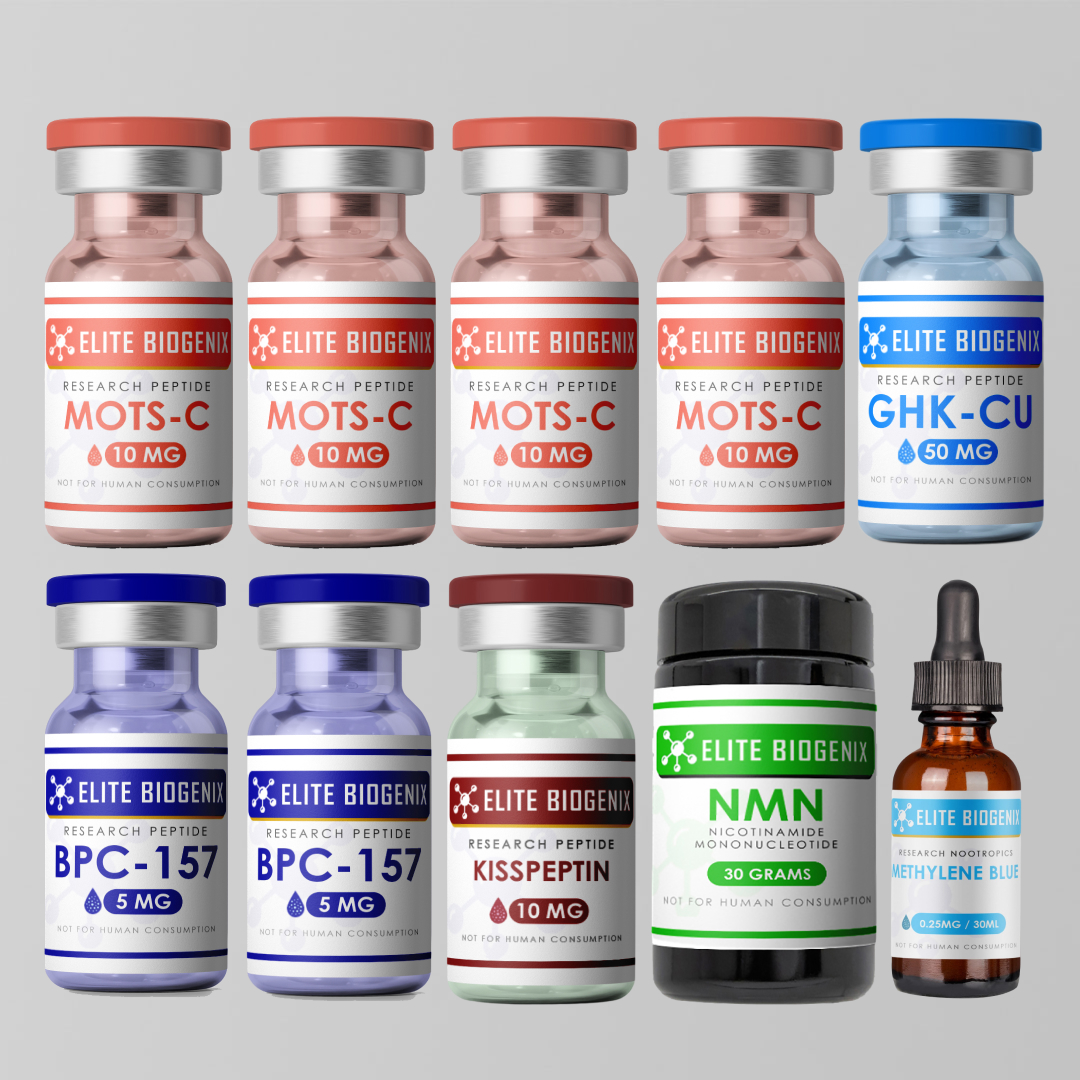
Alcohol Research Stack: MOTS-C, GHK-Cu, BPC-157, Kisspeptin, Methylene Blue & NMN – EliteBiogenix.com
4 MOTS-C 10mg
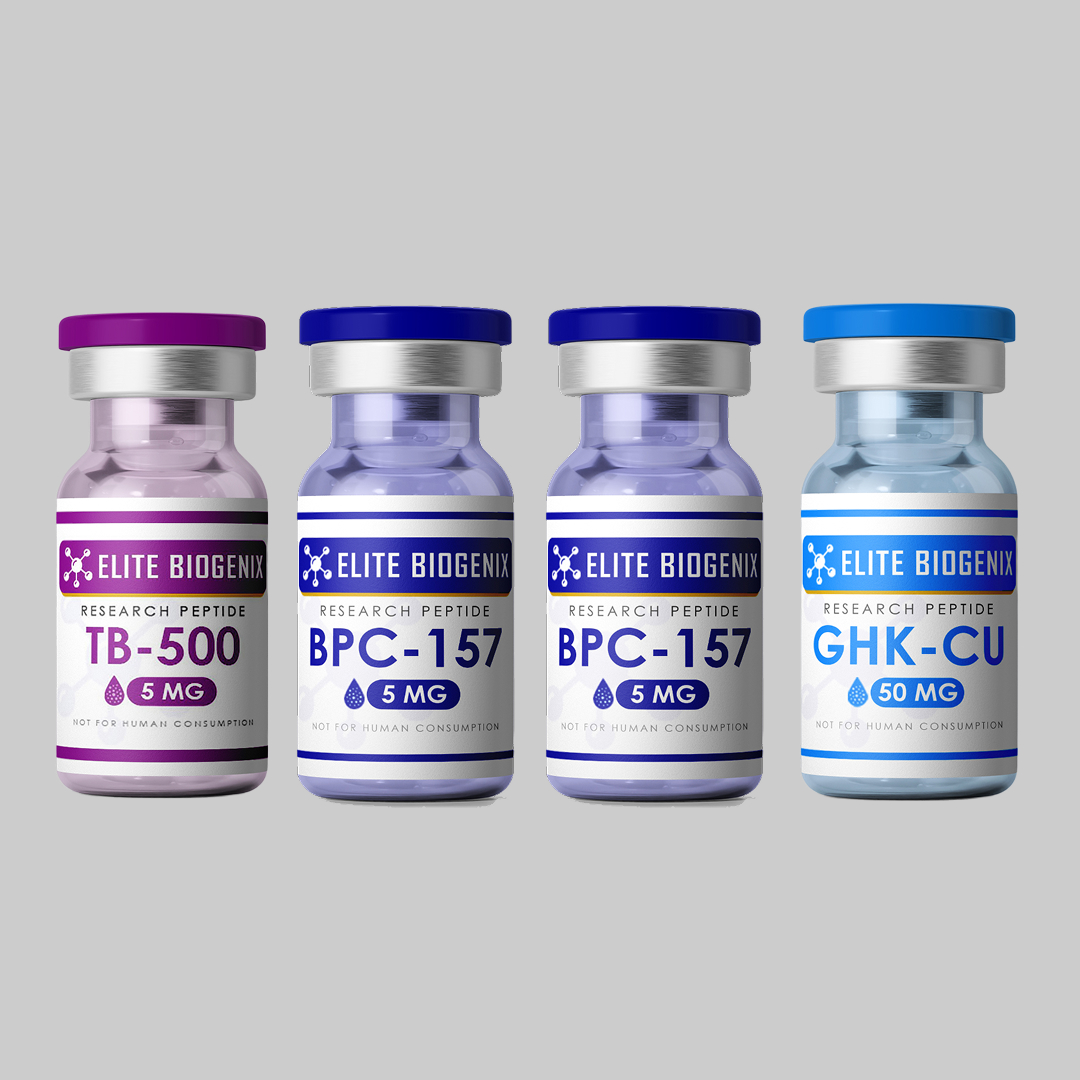
2 BPC-157 5mg
1 GHK-CU 50mg
1 Kisspeptin 10mg
1 Methylene Blue .25mg/ml, 30ml
1 NMN 30 grams
Alcohol Research Stack – A Comprehensive Research Protocol for Investigating Ethanol-Induced Cellular, Metabolic, and Gastrointestinal Damage
Welcome to EliteBiogenix, your premier source for advanced, research-grade biochemicals. Our Alcohol Research Stack represents a cutting-edge, multi-targeted formulation of six powerful research compounds: MOTS-C, GHK-Cu, BPC-157, Kisspeptin-10, Methylene Blue, and Nicotinamide Mononucleotide (NMN). This sophisticated stack is specifically designed for preclinical laboratory investigation into the complex, multi-system damage induced by ethanol exposure, with a particular focus on hepatic steatosis, intestinal permeability (“leaky gut”), systemic inflammation, hormonal disruption, and mitochondrial dysfunction.
This advanced research product is engineered exclusively for in vitro and animal model studiesconducted by qualified researchers in controlled laboratory settings. It provides a holistic approach to studying the pathways of ethanol-related tissue damage and the potential mechanisms for cellular repair and system recovery.
Alcohol Research Stack CRITICAL NOTICE: This product is sold strictly for research purposes only. It is NOT intended for human or veterinary consumption, diagnosis, or treatment. The Alcohol Research Stack is to be used solely by qualified researchers in controlled laboratory environments. By purchasing this product, you confirm that you are a licensed researcher or affiliated with a research institution and will adhere to all applicable local, state, and federal regulations governing the use of research chemicals.
Each component is synthesized to the highest standards and undergoes rigorous third-party High-Performance Liquid Chromatography (HPLC) analysis to ensure ≥98% purity, providing exceptional reliability and reproducibility for your scientific research data.
Alcohol Research Stack Focus: A Multi-System Approach to Ethanol-Induced Pathophysiology
Chronic ethanol exposure is a well-established model for studying multi-organ damage in preclinical research. Its effects are systemic, impacting:
-
Gastrointestinal Barrier Integrity: Ethanol disrupts tight junctions, leading to intestinal hyperpermeability (“leaky gut”), allowing endotoxins like LPS to translocate into the portal circulation.
-
Hepatic Function: The liver bears the primary burden of ethanol metabolism, leading to steatosis, inflammation, oxidative stress, and potentially fibrosis.
-
Mitochondrial Dysfunction: Ethanol and its metabolite, acetaldehyde, directly impair mitochondrial electron transport chain function, reducing ATP production and increasing reactive oxygen species (ROS).
-
Hormonal Axis Disruption: Chronic exposure can dysregulate the hypothalamic-pituitary-gonadal (HPG) axis, affecting vital signaling pathways.
-
Systemic Inflammation: Gut-derived endotoxins trigger a robust systemic inflammatory response, contributing to further tissue damage.
This stack is designed to simultaneously target these key pathways, allowing researchers to study a comprehensive recovery protocol in a single, controlled model.
1. MOTS-C – The Mitochondrial Regulator
Alcohol Research Stack Mechanism of Action:
MOTS-c is a mitochondrial-derived peptide encoded in the mitochondrial DNA. It regulates metabolic homeostasis by:
-
AMPK Activation: Promoting glucose uptake and fatty acid oxidation in skeletal muscle, shifting metabolism away from lipid accumulation in the liver.
-
Antioxidant Defense: Enhancing the cellular response to oxidative stress, a primary pathway in ethanol-induced hepatotoxicity.
-
Insulin Sensitization: Improving insulin sensitivity, which is often compromised in metabolic models of ethanol consumption.
Alcohol Research Stack Applications & Key Studies for Alcohol Models:
-
Attenuation of Hepatic Steatosis: MOTS-c has been shown to effectively reduce diet-induced fatty liver disease, a pathway directly relevant to alcoholic fatty liver.
-
Study: The mitochondrial-derived peptide MOTS-c attenuates diet-induced obesity and insulin resistance
-
Research Dosage: 5 mg/kg administered intraperitoneally, daily in murine models.
-
-
Enhancement of Metabolic Homeostasis: Its action on the AMPK pathway makes it a key compound for studying the metabolic dysregulation caused by ethanol.
-
Study: MOTS-c: A novel mitochondrial-derived peptide regulating muscle and fat metabolism
-
Research Dosage: 0.5 mg/kg administered subcutaneously in rodent models.
-
Suggested Research Dosages:
-
Preclinical metabolic studies: 0.5 – 5 mg/kg, administered via subcutaneous or intraperitoneal injection daily.
Best for: Research models focused on alcoholic hepatic steatosis, mitochondrial dysfunction, and metabolic syndrome secondary to ethanol exposure.
2. GHK-Cu – The Systemic Repair and Anti-Fibrotic Peptide
Alcohol Research Stack Mechanism of Action:
GHK-Cu is a naturally occurring copper-binding peptide that orchestrates multiple aspects of tissue repair and protection:
-
Collagen Remodeling: Upregulates synthesis of collagen and glycosaminoglycans while also breaking down damaged collagen, preventing pathological fibrosis.
-
Powerful Antioxidant & Anti-Inflammatory: Reduces inflammatory cytokines (TNF-α, IL-6) and scavenges free radicals.
-
Stem Cell Recruitment: Attracts immune cells and stem cells to sites of damage, promoting regeneration.
-
Gene Expression Normalization: Shifts gene expression from a diseased state to a healthier profile.
Alcohol Research Stack Applications & Key Studies:
-
Reduction of Liver Fibrosis: GHK-Cu has demonstrated efficacy in reducing collagen deposition and fibrosis in models of liver injury.
-
Study: Regenerative and Protective Actions of the GHK-Cu Peptide in the Light of the New Gene Data
-
Research Dosage: 2 mg/kg administered subcutaneously daily.
-
-
Accelerated Wound Healing and Tissue Repair: Its systemic repair actions are beneficial for healing ethanol-damaged gastrointestinal mucosa.
-
Research Dosage: 1-2 mg/kg administered systemically or applied topically.
Suggested Research Dosages:
-
Preclinical systemic repair studies: 1 – 2 mg/kg administered subcutaneously, daily.
Best for: Investigations into hepatic fibrosis, repair of ethanol-damaged gastric and intestinal mucosa, and reduction of systemic inflammation.
3. BPC-157 – The Gut Barrier Stabilizer
Alcohol Research Stack Mechanism of Action:
BPC-157 is a stable gastric pentadecapeptide renowned for its remarkable healing properties, particularly within the GI tract:
-
Tight Junction Reinforcement: Upregulates the expression of proteins like ZO-1, directly combating “leaky gut” by strengthening the intestinal barrier.
-
Angiogenesis: Promotes the formation of new blood vessels, restoring blood flow and nutrient delivery to damaged tissues.
-
Cytoprotection: Protects endothelial cells and promotes healing of ulcers and lesions throughout the GI tract.
Alcohol Research Stack Applications & Key Studies:
-
Protection Against Ethanol-Induced Gastric Lesions: BPC-157 has shown exceptional efficacy in protecting against and healing gastric damage caused by ethanol.
-
Study: The beneficial effect of BPC 157, a 15 amino acid peptide, on gastrointestinal lesions
-
Research Dosage: 10 µg/kg administered orally or intraperitoneally.
-
-
Healing of Intestinal Permeability: It is effective in models of colitis and other inflammatory bowel conditions, which share pathways with ethanol-induced gut damage.
-
Research Dosage: 10 µg/kg administered intraperitoneally.
Suggested Research Dosages:
-
Preclinical GI studies: 1 – 10 µg/kg administered systemically or orally, daily.
Best for: Research models focused on ethanol-induced gastric ulcers, intestinal hyperpermeability (“leaky gut”), and overall GI tract integrity.
4. Kisspeptin-10 – The HPG Axis Regulator
Alcohol Research Stack Mechanism of Action:
Kisspeptin-10 is a decapeptide that is the most potent known stimulator of Gonadotropin-Releasing Hormone (GnRH) secretion:
-
Hypothalamic Pulsatility: Triggers the pulsatile release of GnRH, which in turn stimulates the pituitary gland to release Luteinizing Hormone (LH) and Follicle-Stimulating Hormone (FSH).
-
Hormonal Circuit Restoration: Ethanol can suppress the hypothalamic-pituitary-gonadal (HPG) axis; Kisspeptin-10 research focuses on restoring this critical endocrine pathway.
Alcohol Research Stack Applications & Key Studies:
-
Stimulation of Gonadotropin Release: Research demonstrates its powerful effect on stimulating the HPG axis, which is often suppressed in chronic ethanol models.
-
Study: Kisspeptin-10 stimulates the release of gonadotropins
-
Research Dosage: 1.6 – 16 nmol/kg administered subcutaneously or intravenously in rodent models.
-
-
Restoration of Hormonal Function: Studies investigate its potential to reverse ethanol-induced suppression of reproductive hormones.
-
Study: Kisspeptin restores pulsatile LH secretion in states of energy deficit
-
Research Dosage: Varies by model; often administered as a continuous infusion or bolus injection.
-
Suggested Research Dosages:
-
Preclinical endocrine studies: 1 – 20 nmol/kg administered subcutaneously.
Best for: Investigations into ethanol-induced hormonal suppression, HPG axis dysfunction, and reproductive endocrine research.
5. Methylene Blue – The Mitochondrial Electron Cycler
Alcohol Research Stack Mechanism of Action:
Methylene Blue is a heterocyclic aromatic compound that acts as an alternative electron carrier in the mitochondrial electron transport chain:
-
Cytochrome C Bypass: Accepts electrons from NADH and directly transfers them to cytochrome c, bypassing Complex I/III, which is often impaired by oxidative stress and ethanol.
-
Enhanced ATP Production: This bypass restores cellular energy production even in dysfunctional mitochondria.
-
Antioxidant: At low doses, it can reduce oxidative stress by cycling between oxidized and reduced states.
-
NO Scavenging: It can inhibit the effects of nitric oxide (NO), which is involved in inflammatory pathways.
Alcohol Research Stack Applications & Key Studies:
-
Improvement of Mitochondrial Function: Research shows it can enhance mitochondrial respiration and ATP production in models of mitochondrial dysfunction.
-
Research Dosage: 0.5 – 4 mg/kg administered intraperitoneally in rodent models.
-
Neuroprotection: Its metabolic enhancing properties have shown promise in models of neurodegenerative disease, relevant to ethanol-induced neurotoxicity.
-
Research Dosage: 1 mg/kg administered intravenously.
Suggested Research Dosages:
-
Preclinical mitochondrial studies: 0.5 – 2 mg/kg administered via intraperitoneal injection.
Best for: Research on ethanol-induced mitochondrial dysfunction, impaired cellular energetics, and neurotoxicity.
6. NMN (Nicotinamide Mononucleotide) – The NAD+ Precursor
Alcohol Research Stack Mechanism of Action:
NMN is a direct precursor to Nicotinamide Adenine Dinucleotide (NAD+), a crucial coenzyme involved in hundreds of metabolic processes:
-
NAD+ Booster: Readily converts to NAD+ in the body, replenishing depleted NAD+ levels.
-
Sirtuin Activation: Elevated NAD+ levels activate sirtuins (SIRT1, SIRT3), which are proteins involved in cellular stress response, metabolism, and aging.
-
Enhanced Mitophagy & Mitochondrial Biogenesis: Supports the removal of damaged mitochondria and the creation of new, healthy ones.
-
DNA Repair: NAD+ is a required substrate for PARP enzymes, which are critical for repairing DNA damage.
Alcohol Research Stack Applications & Key Studies:
-
Reversal of Age-Associated Metabolic Decline: NMN supplementation has been shown to restore NAD+ levels and improve mitochondrial function in aged models.
-
Research Dosage: 100 – 500 mg/kg administered orally, daily in drinking water or via gavage.
-
Protection Against Fatty Liver Disease: By improving mitochondrial function and NAD+ levels, NMN can help reverse hepatic steatosis.
-
Study: NMN ameliorates diet-induced obesity and hepatic steatosis
-
Research Dosage: 500 mg/kg/day orally.
-
Suggested Research Dosages:
-
Preclinical metabolic studies: 100 – 500 mg/kg administered orally, daily.
Best for: Research models focused on ethanol-induced NAD+ depletion, mitochondrial dysfunction, age-related metabolic decline, and DNA damage response.
Synergistic Power of the Alcohol Research Stack
The power of this stack lies in the complementary and multi-system attack on ethanol-induced pathophysiology:
-
BPC-157 acts as the first line of defense, sealing the leaky gut barrier to prevent endotoxin translocation and systemic inflammation.
-
MOTS-c, Methylene Blue, and NMN work in concert to rescue mitochondrial function. MOTS-c and NMN boost NAD+ and activate AMPK/SIRT1, while Methylene Blue provides an immediate bypass for the damaged electron transport chain, restoring cellular energy production.
-
GHK-Cu provides systemic repair, reducing inflammation and fibrosis in the liver and other organs damaged by the inflammatory cascade.
-
Kisspeptin-10 addresses the endocrine disruption often caused by chronic ethanol exposure, helping to restore normal hypothalamic-pituitary signaling.
This comprehensive, six-compound approach allows researchers to study recovery from initial gut damage and endotoxemia to mitochondrial collapse and end-organ dysfunction in a single, integrated protocol.
Why Researchers Trust EliteBiogenix
-
Uncompromising Purity: Every batch is HPLC-tested and verified ≥98% pure. Certificates of Analysis are available upon request.
-
Research-Specific Focus: Our products are designed, labeled, and sold for laboratory use only. We are a trusted partner for academic and institutional research.
-
USA Shipping & Support: Fast, discreet, and compliant shipping to research facilities across the United States.
-
Bulk Discounts Available: Contact us for pricing on large-volume research projects and long-term study needs.
Order the Alcohol Research Stack today from EliteBiogenix.com to advance your investigation into the pathophysiology of ethanol exposure and potential recovery mechanisms.
Disclaimer: These materials are for laboratory research purposes only. They are not drugs, food additives, or for human/veterinary use. The information presented is a compilation of scientific studies and is for educational purposes within the research community. It is not medical advice. You must be 18 years of age or older to purchase.



There are no reviews yet.