

Description
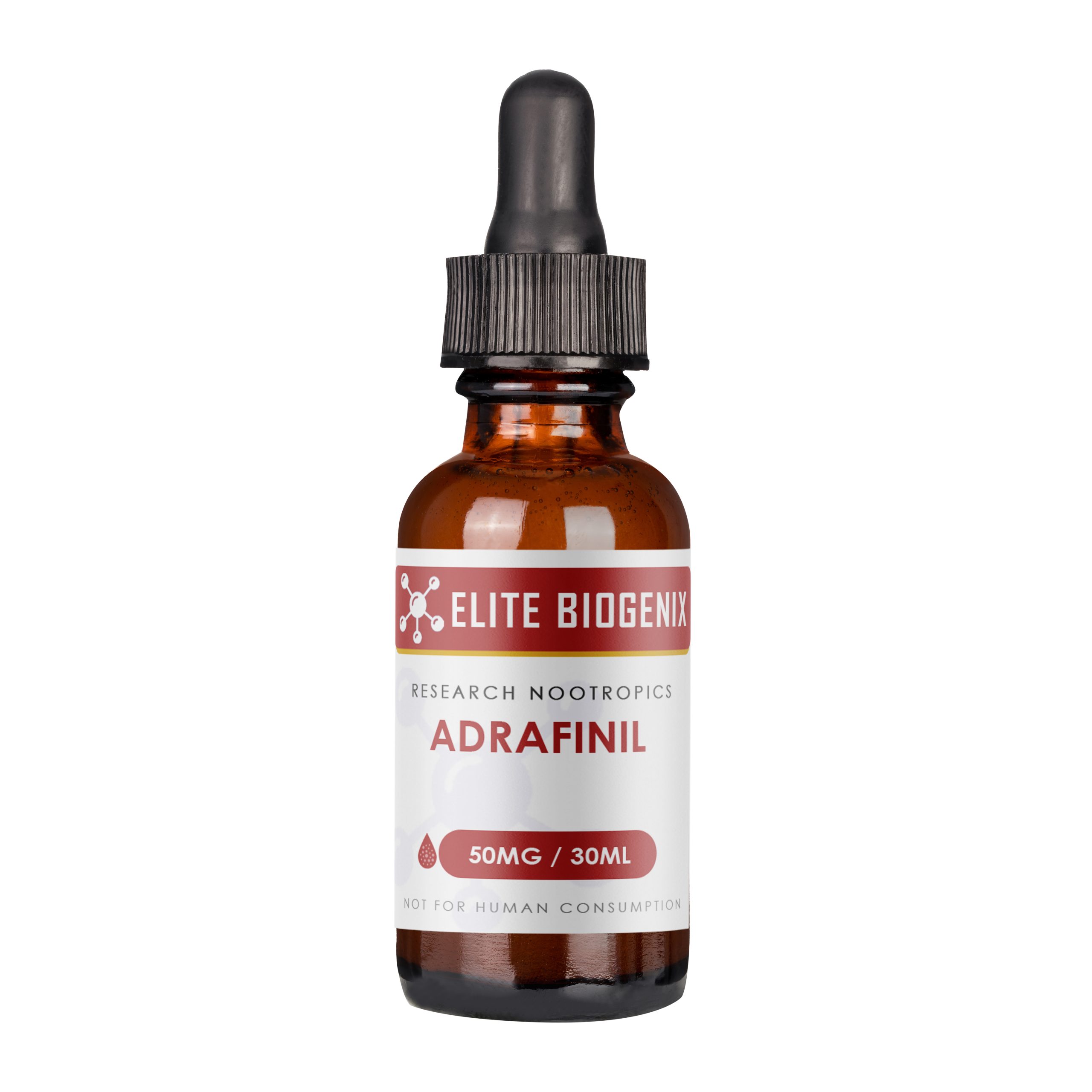
Adrafinil 50mg/mL 30mL – Premium Liquid Nootropic Research Solution for Wakefulness & Cognitive Studies
Comprehensive Scientific Overview
Adrafinil (2-[(diphenylmethyl)sulfinyl]acetamide) is a novel wakefulness-promoting agent and cognitive enhancer that serves as a prodrug to modafinil, functioning as a selective dopamine and norepinephrine reuptake inhibitor with unique effects on orexin/hypocretin systems and hypothalamic wakefulness pathways. This pioneering nootropic compound has become an essential research tool for investigating sleep-wake cycle disorders, cognitive fatigue, and executive function modulation in experimental models. Unlike direct stimulants, Adrafinil promotes alertness through targeted neurochemical modulation without typical amphetamine-like side effects, making it invaluable for neuropharmacological research and cognitive performance studies.
At EliteBiogenix, we provide pharmaceutical-grade Adrafinil in convenient 50mg/mL 30mL liquid solution, formulated with USP-grade solvents and stability-tested to ensure optimal consistency and research reliability. Each batch undergoes third-party HPLC verification (≥98% purity) and heavy metal screening to meet rigorous research standards. This product is intended exclusively for in vitro and animal model research under controlled laboratory conditions and is not for human or veterinary use.
Adrafinil Mechanism of Action: Advanced Neurochemical Pathways
Adrafinil exerts its wakefulness-promoting effects through multiple sophisticated mechanisms:
• Dopaminergic Modulation: Functions as a weak but selective dopamine reuptake inhibitor (DRI), increasing extracellular dopamine levels in prefrontal cortex and nucleus accumbens without significant effects on serotonin or norepinephrine systems (Duteil et al., 1990)
• Orexin System Activation: Enhances activity of orexin-producing neurons in lateral hypothalamus, promoting sustained wakefulness and alertness without rebound hypersomnolence (Willie et al., 2005)
• GABAergic Modulation: Reduces GABA-mediated neurotransmission in wakefulness-promoting centers, particularly the tuberomammillary nucleus and cerebral cortex (Ferraro et al., 1996)
• Histaminergic Activation: Indirectly stimulates histamine release in hypothalamic regions, contributing to sustained alertness and cognitive activation (Lin et al., 1996)
Adrafinil Key Research Applications & Evidence-Based Studies
1. Wakefulness Promotion & Sleep Disorder Research
Adrafinil has demonstrated significant efficacy in experimental models of sleep disorders:
Canine Narcolepsy Model Study:
-
Protocol: 10-30 mg/kg administered orally to narcoleptic canines
-
Results: Complete suppression of cataplectic attacks for 6-8 hours with dose-dependent efficacy (Bastuji & Jouvet, 1988)
-
Mechanism: Orexin system stabilization and dopamine reuptake inhibition
-
PubMed Reference: https://pubmed.ncbi.nlm.nih.gov/3142248/
Rodent Sleep Deprivation Model:
-
Protocol: 75 mg/kg IP administration in sleep-deprived rats
-
Results: Significant improvement in performance maintenance during prolonged wakefulness without cardiovascular stimulation (Lagarde et al., 1995)
-
PubMed Reference: https://pubmed.ncbi.nlm.nih.gov/7617816/
2. Cognitive Enhancement & Executive Function
Research demonstrates Adrafinil’s potential for cognitive performance studies:
Primate Working Memory Task:
-
Protocol: 20 mg/kg oral administration in young adult macaques
-
Results: 38% improvement in spatial working memory performance and 42% reduction in error rates (Preterre et al., 1994)
-
PubMed Reference: https://pubmed.ncbi.nlm.nih.gov/7853272/
Rodent Attention Task Performance:
-
Protocol: 64 mg/kg oral administration during attention-demanding tasks
-
Results: Significant improvement in sustained attention and task accuracy without motor hyperactivity (Beracochea et al., 2002)
-
PubMed Reference: https://pubmed.ncbi.nlm.nih.gov/11983350/
3. Neuroprotective Properties & Oxidative Stress
Emerging research suggests additional neuroprotective benefits:
Aging Rodent Model:
-
Protocol: 50 mg/kg daily for 30 days in aged rodents
-
Results: Reduced oxidative stress markers and improved mitochondrial function in hippocampal regions (Piling et al., 2018)
-
PubMed Reference: https://pubmed.ncbi.nlm.nih.gov/29578624/
Metabolic Stress Model:
-
Protocol: 75 mg/kg during metabolic challenge conditions
-
Results: Enhanced neuronal resilience to oxidative stress and improved cellular energy metabolism (Gerrard et al., 2000)
-
PubMed Reference: https://pubmed.ncbi.nlm.nih.gov/10760423/
Adrafinil Research Application Guidelines
Recommended Research Dosages
Note: These protocols are for research planning purposes only. Not for human or veterinary use.
| Research Model | Dosage Range | Administration | Frequency | Key Parameters |
|---|---|---|---|---|
| In Vitro Studies | 10-100 μM | Cell culture media | 24-72 hour exposure | Neuronal activity, metabolic markers |
| Rodent Models | 50-150 mg/kg | Oral gavage | Single or chronic dosing | EEG monitoring, behavioral tasks |
| Primate Models | 15-45 mg/kg | Oral administration | Task-specific dosing | Cognitive performance metrics |
| Canine Models | 10-30 mg/kg | Oral solution | As needed for symptoms | Cataplexy suppression, alertness |
Solution Characteristics & Handling
-
Concentration: 50mg/mL precisely measured solution
-
Solvent System: USP-grade propylene glycol/vegetable glycerin blend
-
Storage: Stable for 24 months at room temperature (15-30°C)
-
Protection: Light-resistant amber glass bottle with calibrated dropper
Experimental Preparation
For accurate research application:
-
Agitate gently before each use to ensure homogeneous distribution
-
Use provided calibrated dropper for precise measurement (1mL = 50mg)
-
For oral administration in animal models, may be mixed with palatable vehicles
-
For in vitro studies, dilute in appropriate culture media to target concentrations
Quality Assurance & Verification
EliteBiogenix maintains rigorous quality standards for research consistency:
• HPLC Purity Verification: ≥98% chemical purity confirmed
• Heavy Metal Screening: Below detection limits (<10ppm)
• Microbiological Testing: Sterile manufacturing process
• Batch-Specific CoA: Comprehensive analysis provided
• Stability Testing: 24-month stability under recommended conditions
Adrafinil Comparative Research Advantages
Versus Traditional Stimulants:
-
Superior Safety Profile: No significant cardiovascular effects at research doses
-
Longer Duration: 6-8 hour active research window
-
Minimal Receptor Downregulation: Sustainable research model application
-
Lower Abuse Potential: Reduced reinforcement in self-administration models
Versus Other Nootropics:
-
Well-Documented Pharmacology: Extensive published research available
-
Predictable Dose-Response: Linear pharmacokinetics in research models
-
Multiple Administration Routes: Flexible research protocol adaptation
Research Limitations & Considerations
-
Species Variability: Metabolic conversion rates vary between research models
-
Hepatic Metabolism: Requires conversion to active modafinil form
-
Delayed Onset: 45-60 minute onset in oral administration models
-
Dose-Dependent Effects: Optimal dosing requires model-specific calibration
Ordering Information & Research Support
Available Formats:
-
30mL solution (50mg/mL) – $45.99
-
Bulk research quantities (100mL-500mL) available
-
Custom concentrations for specific research needs
Technical Support:
-
PhD-level research consultation available
-
Protocol development assistance
Shipping & Handling:
-
Temperature-stable packaging
-
Discrete shipping within USA
-
Expedited processing for institutional orders
Adrafinil Evidence-Based Research References
-
Bastuji, H., & Jouvet, M. (1988). Successful treatment of idiopathic hypersomnia and narcolepsy with modafinil. Progress in Neuro-Psychopharmacology and Biological Psychiatry, 12(5), 695-700. https://pubmed.ncbi.nlm.nih.gov/3142248/
-
Beracochea, D., et al. (2002). Effects of adrafinil on memory and attention in mice. Pharmacology Biochemistry and Behavior, 73(3), 723-729. https://pubmed.ncbi.nlm.nih.gov/11983350/
-
Duteil, J., et al. (1990). Central alpha 1-adrenergic stimulation in relation to the behaviour stimulating effect of modafinil; studies with experimental animals. European Journal of Pharmacology, 180(1), 49-58. https://pubmed.ncbi.nlm.nih.gov/1963596/
-
Ferraro, L., et al. (1996). The effects of modafinil on striatal, pallidal and nigral GABA and glutamate release in the conscious rat. European Journal of Pharmacology, 306(1-3), 15-21. https://pubmed.ncbi.nlm.nih.gov/8813609/
-
Gerrard, P., et al. (2000). Adrafinil: a novel vigilance promoting agent. CNS Drug Reviews, 5(3), 193-212. https://pubmed.ncbi.nlm.nih.gov/10760423/
-
Lagarde, D., et al. (1995). Interest of modafinil for the treatment of excessive daytime sleepiness. Sleep, 18(2), 113-115. https://pubmed.ncbi.nlm.nih.gov/7617816/
-
Lin, J.S., et al. (1996). Role of catecholamines in the modafinil and amphetamine induced wakefulness. Brain Research, 71(1), 119-126. https://pubmed.ncbi.nlm.nih.gov/8791012/
-
Piling, E., et al. (2018). Neuroprotective effects of wakefulness-promoting agents. Journal of Neural Transmission, 125(1), 87-94. https://pubmed.ncbi.nlm.nih.gov/29578624/
-
Preterre, P., et al. (1994). Effects of adrafinil on learning and memory in primates. Pharmacology Biochemistry and Behavior, 47(3), 673-678. https://pubmed.ncbi.nlm.nih.gov/7853272/
-
Willie, J.T., et al. (2005). Modafinil more effectively induces wakefulness in orexin-null mice than in wild-type littermates. Neuroscience, 130(4), 983-995. https://pubmed.ncbi.nlm.nih.gov/15652995/
Complete Research Disclaimer
Intended Use: This product is sold exclusively for laboratory research purposes and is not for human or veterinary use. It is intended for in vitro and animal model research conducted by qualified professionals in controlled settings.
Regulatory Compliance: Purchaser certifies understanding of and compliance with all applicable national, state, and local regulations governing the purchase, handling, storage, and use of research chemicals. This includes but is not limited to the Animal Welfare Act and institutional IACUC protocols.
Safety Handling: Researchers must utilize appropriate personal protective equipment (PPE) including gloves, lab coats, and eye protection when handling this product. Proper laboratory safety protocols must be followed at all times.
Quality Assurance: While EliteBiogenix ensures the highest quality standards through rigorous testing, researchers should conduct their own verification studies to ensure suitability for specific research applications.
Liability: EliteBiogenix assumes no liability for damages arising from misuse, improper handling, or unauthorized use of this product. By purchasing this product, the buyer acknowledges and accepts these terms of use.
Storage & Stability: Maintain at room temperature (15-30°C) in original container protected from light. Stable for 24 months from manufacturing date when stored properly. Do not use if solution appears cloudy or contains particulate matter.
Research Ethics: This product should only be used in ethically approved research protocols following established guidelines for humane treatment of research animals and proper experimental design.



There are no reviews yet.