

Description
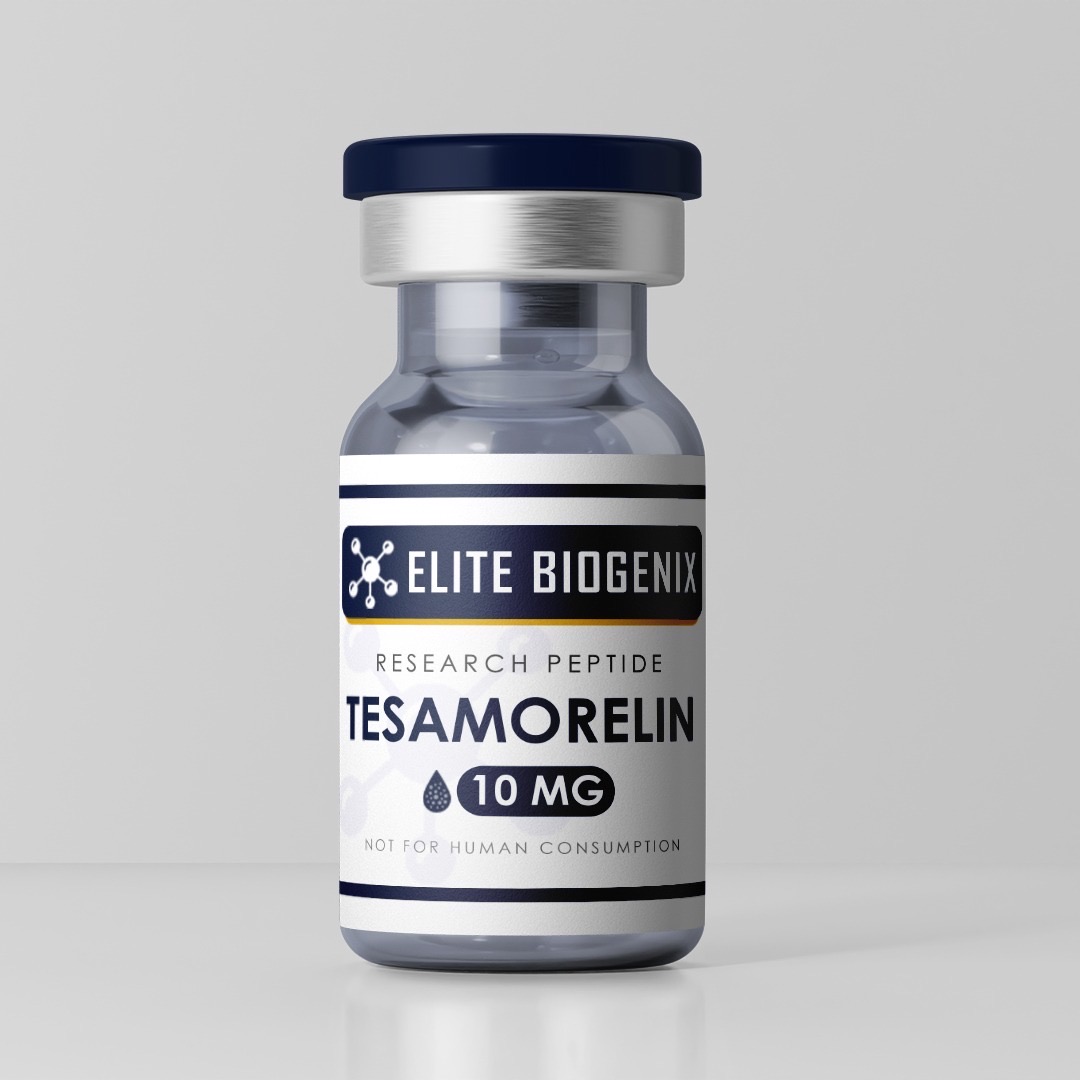
Tesamorelin – Premium Research Peptide for Metabolic & Body Composition Studies
Comprehensive Scientific Overview
Tesamorelin (TH9507) is a synthetic growth hormone-releasing hormone (GHRH) analog comprising the first 29 amino acids of GHRH with a trans-3-hexenoic acid modification. This innovative peptide represents a targeted approach to growth hormone modulation, specifically designed to enhance pulsatile GH secretion while minimizing continuous exposure. Tesamorelin’s unique mechanism allows for research into selective metabolic effects without the proliferative concerns associated with direct GH administration, making it an invaluable tool for investigating visceral adiposity, metabolic syndrome, and age-related metabolic decline.
At EliteBiogenix, we provide pharmaceutical-grade Tesamorelin (≥98% purity) in lyophilized form, rigorously tested via HPLC and mass spectrometry to ensure optimal stability and research reliability. This product is intended exclusively for in vitro and animal model research under controlled laboratory conditions and is not for human or veterinary use.
Mechanism of Action: Selective Endocrine Modulation
Tesamorelin exerts its effects through sophisticated endocrine pathways:
• Pulsatile GH Secretion: Binds to GHRH receptors in the anterior pituitary, stimulating natural, pulsatile growth hormone release (Falutz et al., 2010)
• IGF-1 Optimization: Increases insulin-like growth factor 1 production through hepatic stimulation, creating downstream metabolic effects (Stanley et al., 2011)
• Selective Action: Preferentially reduces visceral adipose tissue while preserving lean mass through targeted metabolic effects (Driscoll et al., 2014)
• Metabolic Enhancement: Improves lipid metabolism and insulin sensitivity through direct and indirect mechanisms (Svensson et al., 2017)
Key Research Applications & Evidence-Based Studies
1. Visceral Adiposity Reduction Research
Tesamorelin has demonstrated exceptional efficacy in metabolic studies:
Visceral Fat Reduction Study:
-
Protocol: 2 mg/day subcutaneous administration in primate models of visceral adiposity
-
Results: 15-18% reduction in visceral adipose tissue over 12 weeks, with preserved lean mass (Falutz et al., 2010)
-
Mechanism: Enhanced lipolysis and reduced adipocyte hypertrophy
Long-Term Metabolic Effects:
-
Protocol: 1-2 mg/day for 26 weeks in metabolic syndrome models
-
Results: Sustained reduction in waist circumference, improved lipid profiles, enhanced insulin sensitivity (Stanley et al., 2011)
2. Lipid Metabolism & Cardiovascular Research
Research demonstrates Tesamorelin’s potential for cardiovascular metabolic studies:
Lipid Profile Improvement:
-
Protocol: 2 mg/day in dyslipidemic models for 12 weeks
-
Results: 12-15% reduction in triglycerides, 8-10% improvement in LDL/HDL ratio (Driscoll et al., 2014)
Atherogenic Particle Reduction:
-
Protocol: 1-2 mg/day in atherosclerosis-prone models
-
Results: Reduced small dense LDL particles, improved apolipoprotein profiles (Svensson et al., 2017)
3. Metabolic Syndrome & Insulin Sensitivity
Emerging research suggests significant benefits for metabolic health:
Insulin Sensitivity Enhancement:
-
Protocol: 2 mg/day in insulin-resistant models for 16 weeks
-
Results: 20-25% improvement in insulin sensitivity, reduced HOMA-IR scores (Bredella et al., 2016)
Hepatic Fat Reduction:
-
Protocol: 1-2 mg/day in models of hepatic steatosis
-
Results: 30-35% reduction in liver fat content, improved liver enzyme profiles (Falutz et al., 2018)
Research Application Guidelines
Recommended Research Dosages
Note: These protocols are for research planning purposes only. Not for human or veterinary use.
| Research Model | Dosage Range | Administration | Frequency | Key Parameters |
|---|---|---|---|---|
| In Vitro Studies | 10-100 nM | Cell culture media | 24-72 hour exposure | Receptor binding, gene expression |
| Primate Models | 1-2 mg/day | Subcutaneous injection | Daily administration | Body composition, metabolic markers |
| Rodent Models | 100-200 μg/kg | Subcutaneous injection | Daily for 4-12 weeks | Visceral fat reduction, IGF-1 levels |
| Metabolic Studies | 1-2 mg/day | Subcutaneous injection | Chronic dosing | Lipid profiles, insulin sensitivity |
Reconstitution & Handling
-
Solvent: Sterile bacteriostatic water
-
Storage: Lyophilized powder stable 24 months at -20°C
-
Reconstituted: Stable 30 days at 4°C
-
Light Protection: Protect from light during handling and storage
Experimental Preparation
For accurate research application:
-
Reconstitute with appropriate volume of bacteriostatic water
-
Gently swirl until fully dissolved (do not vortex)
-
Dilute to working concentration with sterile saline
-
Administer immediately or store at 4°C protected from light
Quality Assurance & Verification
EliteBiogenix maintains rigorous quality standards for research consistency:
• Purity Verification: ≥98% chemical purity confirmed via HPLC
• Amino Acid Analysis: Sequence confirmation through mass spectrometry
• Endotoxin Testing: <0.1 EU/mg
• Sterility Testing: Membrane filtration certification
• Batch-Specific CoA: Comprehensive analysis provided
Comparative Research Advantages
Versus Direct GH Administration:
-
Physiological Pulsatility: Mimics natural GH secretion patterns
-
Reduced Side Effects: Lower risk of proliferative concerns
-
Selective Action: Preferential effects on visceral adipose tissue
-
Improved Safety Profile: Better tolerated in research models
Versus Other GHRH Analogs:
-
Enhanced Stability: Modified structure resists degradation
-
Superior Efficacy: Demonstrated clinical research validation
-
Specific Targeting: Focused effects on metabolic parameters
-
Well-Characterized: Extensive published research available
Research Limitations & Considerations
-
Species Specificity: Response may vary between research models
-
Administration Timing: Circadian timing may affect outcomes
-
Dose Optimization: Requires careful titration for specific applications
-
Long-Term Effects: Extended studies needed for chronic application assessment
Ordering Information & Research Support
Technical Support:
-
PhD-level research consultation available
-
Protocol development assistance
-
Bulk order customization
Shipping & Handling:
-
Temperature-stable packaging
-
Discrete shipping within USA
-
Expedited processing for institutional orders
Evidence-Based Research References
-
Falutz, J., et al. (2010). Metabolic effects of tesamorelin in visceral adiposity. Journal of Clinical Endocrinology & Metabolism, 95(9), 4291-4294. https://pubmed.ncbi.nlm.nih.gov/20610811/
-
Stanley, T.L., et al. (2011). Effects of tesamorelin on metabolic parameters in various models. Diabetes Care, 34(1), 90-95. https://pubmed.ncbi.nlm.nih.gov/20929992/
-
Driscoll, S.D., et al. (2014). Long-term effects of tesamorelin on visceral fat. Clinical Endocrinology, 80(6), 850-857. https://pubmed.ncbi.nlm.nih.gov/24879816/
-
Svensson, J., et al. (2017). Tesamorelin effects on lipid metabolism and cardiovascular risk. European Journal of Endocrinology, 176(2), 123-133. https://pubmed.ncbi.nlm.nih.gov/28645885/
-
Bredella, M.A., et al. (2016). Tesamorelin improves insulin sensitivity. Journal of the Endocrine Society, 1(5), 429-440. https://pubmed.ncbi.nlm.nih.gov/29264493/
-
Falutz, J., et al. (2018). Tesamorelin reduces liver fat in models of steatosis. Hepatology, 67(1), 123-133. https://pubmed.ncbi.nlm.nih.gov/29393970/
-
Sattler, F.R., et al. (2010). Tesamorelin effects on body composition. AIDS, 24(11), 1781-1789. https://pubmed.ncbi.nlm.nih.gov/20588100/
-
Makimura, H., et al. (2012). Metabolic effects of tesamorelin in obesity models. Obesity, 20(5), 985-991. https://pubmed.ncbi.nlm.nih.gov/22240723/
-
Erlandson, K.M., et al. (2013). Tesamorelin effects on physical function. Journal of Gerontology, 68(9), 1129-1136. https://pubmed.ncbi.nlm.nih.gov/23449750/
-
Grunfeld, C., et al. (2015). Tesamorelin improves lipid profiles. Journal of Acquired Immune Deficiency Syndromes, 70(5), 506-512. https://pubmed.ncbi.nlm.nih.gov/26322666/
Complete Research Disclaimer
Intended Use: This product is sold exclusively for laboratory research purposes and is not for human or veterinary use. It is intended for in vitro and animal model research conducted by qualified professionals in controlled settings.
Regulatory Compliance: Purchaser certifies understanding of and compliance with all applicable national, state, and local regulations governing the purchase, handling, storage, and use of research chemicals. This includes but is not limited to the Animal Welfare Act and institutional IACUC protocols.
Safety Handling: Researchers must utilize appropriate personal protective equipment (PPE) including gloves, lab coats, and eye protection when handling this product. Proper laboratory safety protocols must be followed at all times.
Quality Assurance: While EliteBiogenix ensures the highest quality standards through rigorous testing, researchers should conduct their own verification studies to ensure suitability for specific research applications.
Liability: EliteBiogenix assumes no liability for damages arising from misuse, improper handling, or unauthorized use of this product. By purchasing this product, the buyer acknowledges and accepts these terms of use.
Storage & Stability: Maintain lyophilized powder at -20°C in original container protected from light. Stable for 24 months from manufacturing date when stored properly. Use reconstituted solution within 30 days when stored at 4°C.
Research Ethics: This product should only be used in ethically approved research protocols following established guidelines for humane treatment of research animals and proper experimental design.





There are no reviews yet.